
Service
Garage Door Maintenance for Santa Clarita Homes
Garage door maintenance built around Santa Clarita's 1956-1999 housing stock and moderate heat band - what fails, how fast, and what it costs to keep ahead of it.
- Licensed & Insured
- Same-Area Service Calls
- Upfront Pricing
What Happens When You Call
-
1
Call or Request a Quote
Tell us what the door is doing and roughly how old the house is - that alone points us toward the likely part before a truck leaves.
-
2
On-Site Diagnosis
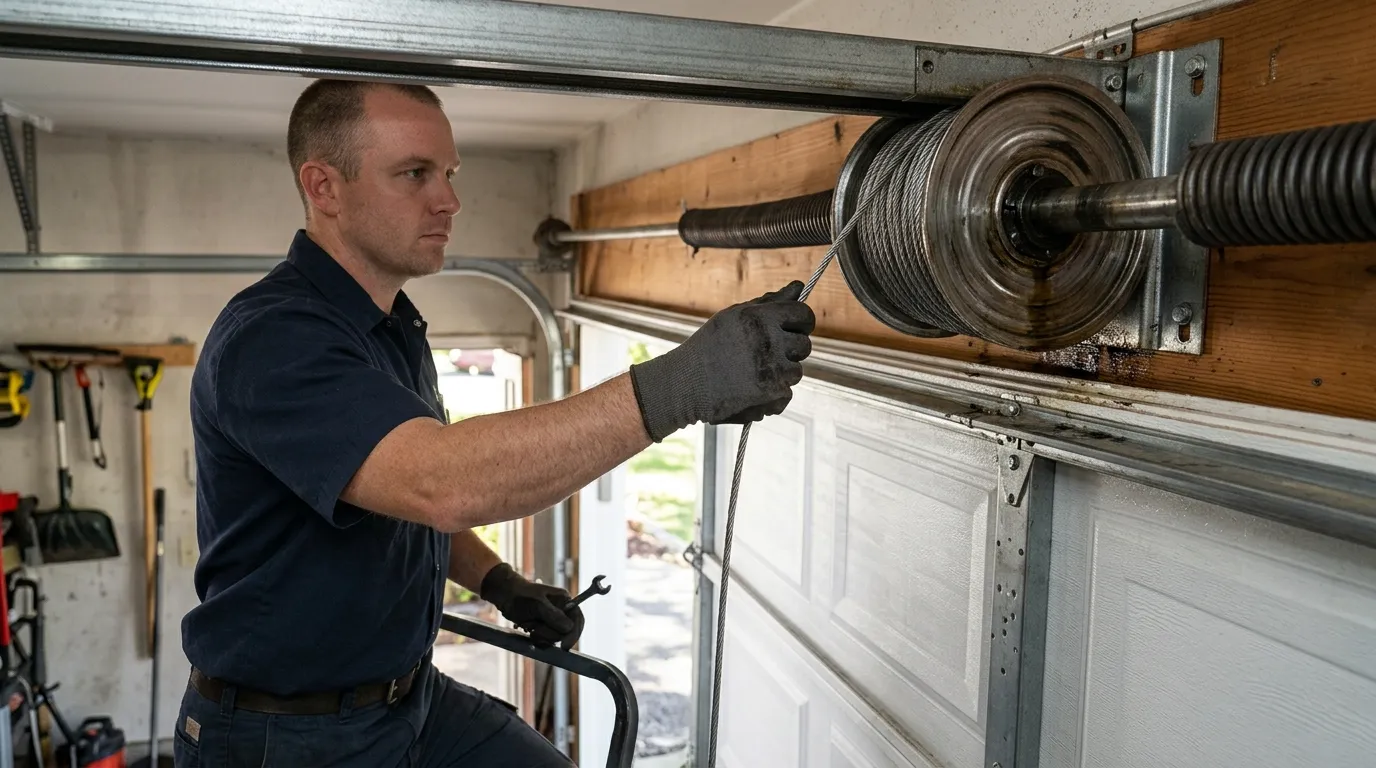
A tech checks the spring, cables, tracks, and opener in person and tells you plainly what is actually wrong.
-
3
Straight Price, No Surprises
You get a number before any work starts. It covers parts and labor, nothing added after the fact.
-
4
Fixed the Same Visit
Most repairs are done in one trip. If a part needs sourcing, we tell you that upfront instead of guessing.
How Long It Takes
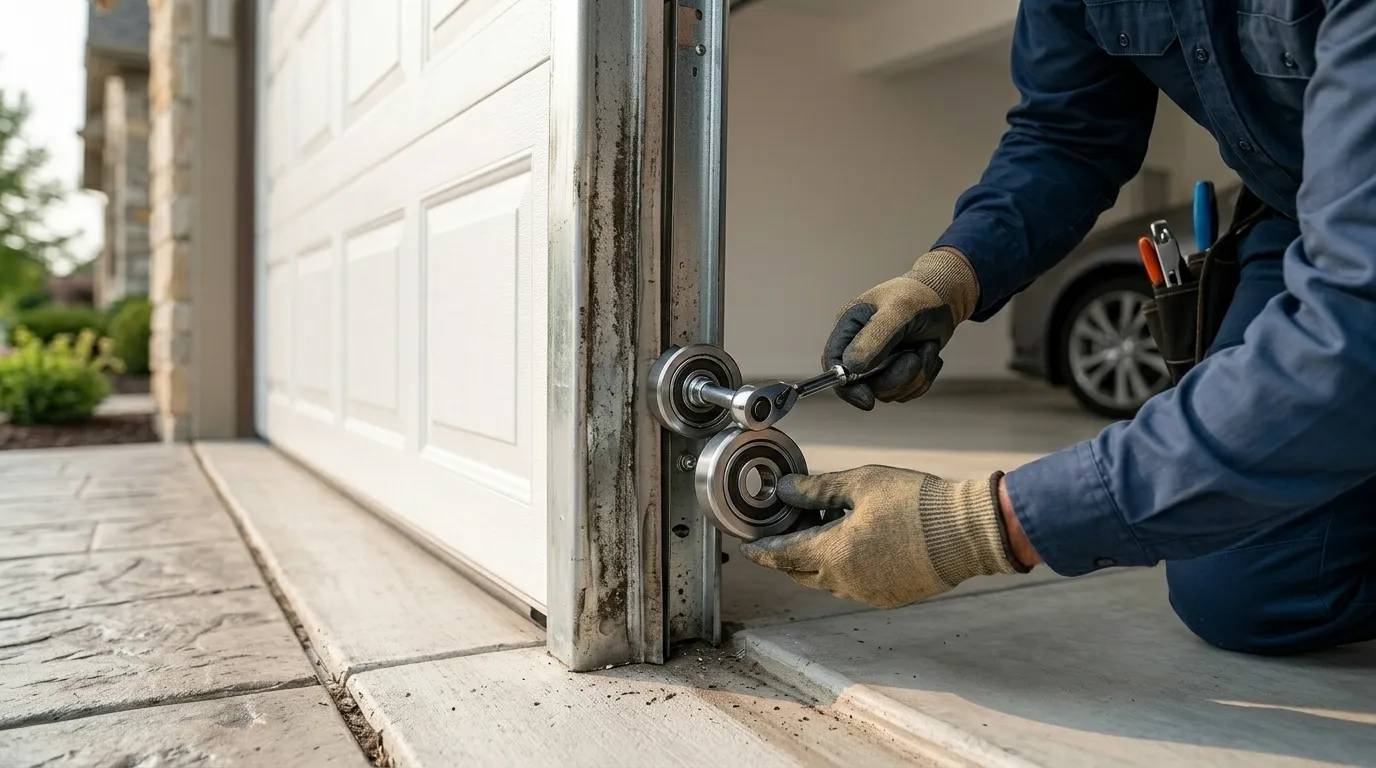
A standard maintenance visit on a residential door runs about the same across this service area, whether the house is a Saugus tract build or a newer place off the Santa Clarita side streets: lubricate the rollers and hinges, check spring tension, tighten track bolts, inspect cables for fraying, and test the opener's force and travel limits. On a single door that's usually a straightforward hour. Double doors, or doors that haven't been touched since they were installed, take longer because we're often re-torquing hardware that's been left alone since the house was built.
Here's the part that's specific to this area: with most of the housing stock going up between 1956 and 1999 (median build year 1975, per F1), a lot of doors we open have never had a real maintenance visit. The original hardware on a 1975-built house is now 50 years old. That doesn't mean it's broken - torsion springs and tracks can outlast the house's paint jobs - but it does mean the visit takes longer than it would on a door installed in the last decade, because we're checking for wear patterns that only show up after decades of thermal cycling.
We don't rush this. A maintenance visit that skips the spring tension check to save fifteen minutes isn't maintenance, it's a wipe-down.
How It Shows Up
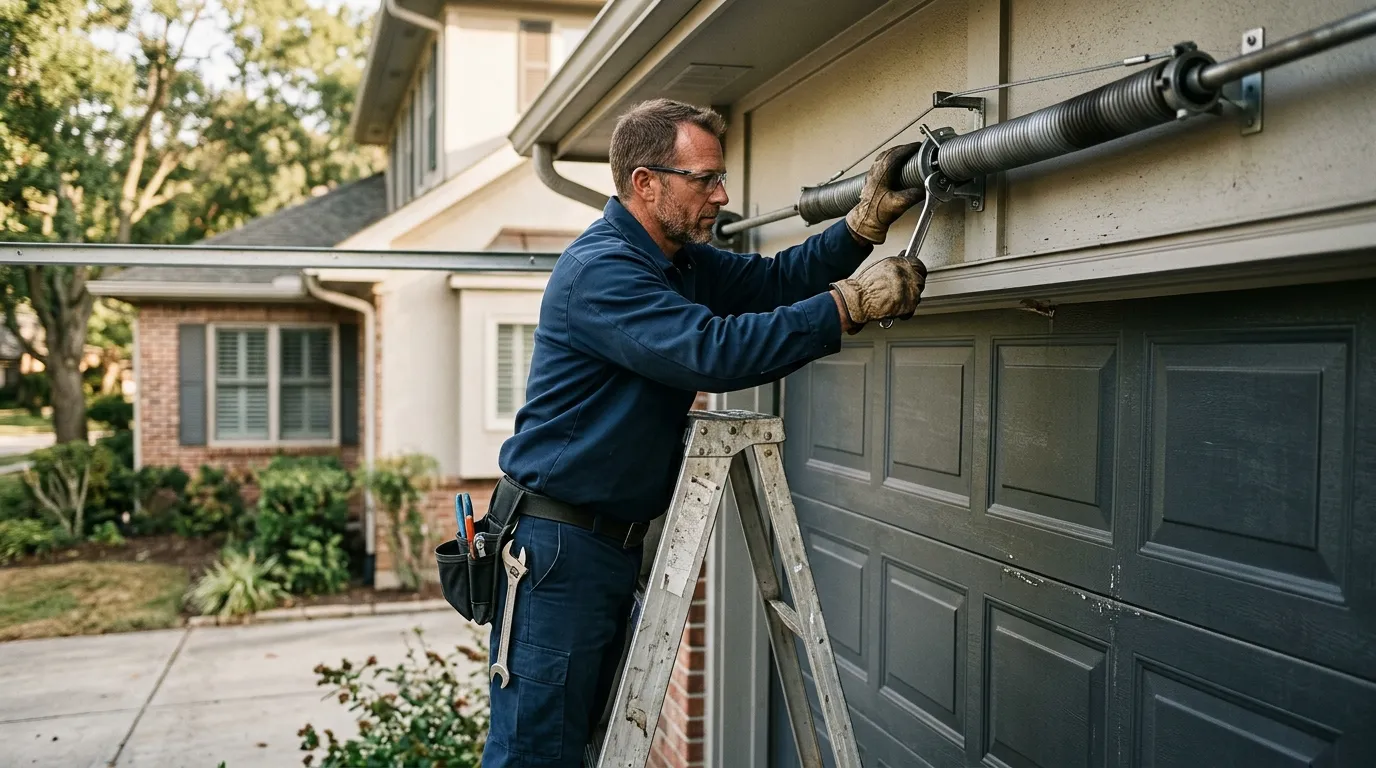
The failure mode we see most in this service area isn't dramatic. It's a door that gets noticeably heavier to lift by hand over a few months, or an opener that starts straining on the last two feet of travel. That's a spring losing tension, and on the 1960s-70s stock that makes up most of the neighborhoods here, it's often paired with track bolts that have backed out slightly from decades of the door running on the same hardware.
Climate plays a role too. This area sits in a moderate heat band - not the extreme swings you get in true desert climates, but enough seasonal expansion and contraction on steel tracks and aluminum panels to loosen fasteners over the years.
On a newer door that's a minor adjustment. On a door original to a 1975-era house, it compounds: the same bolts have been loosening and never getting re-torqued for fifty years.
What you notice at home: the door starts making a new noise on the way up, or it doesn't sit flush at the bottom anymore, or the opener light blinks and the door reverses for no clear reason. None of that is an emergency. All of it is the thing maintenance is supposed to catch before it becomes one.
The Cost of This Job
We don't have a posted price to quote here, and we're not going to make one up. What we can tell you is what drives the cost on a given visit: whether it's a single or double door, how much corrosion or wear is on the hardware, and whether the opener needs anything beyond a basic force/limit check. A door that's had regular maintenance costs less to maintain than one that hasn't, because we're not stopping mid-visit to deal with a frozen bolt or a cable that's one strand from failing.
Given that median household income in this service area runs $119,775 across roughly 33,875 households, with about 19,719 of those owner-occupied houses, most of the maintenance calls we run are on owned homes where the door is a long-term asset, not a rental fix. That changes the math: it usually makes sense to spend on maintenance now rather than wait for a spring to snap or a track to bend, because a full spring replacement or track job costs more than the years of tune-ups that would have caught it early.
Our honest limitation: if a door's hardware is original and heavily worn, a maintenance visit sometimes turns into a recommendation to replace parts rather than just service them. We'll tell you that on the spot instead of billing for a tune-up that won't hold.
Why This Fails Locally
Put the three facts together and the pattern is clear. Most houses across this service area were built between 1956 and 1999, with the bulk of the stock dating to the 1960s and 70s across the thirteen named areas we work in.
That means most garage doors here are running on hardware that predates modern galvanized coatings and sealed bearings. Add a moderate heat climate band - not brutal, but enough daily and seasonal temperature swing to keep steel expanding and contracting year after year - and you get a slow, steady loosening of fasteners and drying-out of lubricant that nobody notices until the door starts binding.
This is different from a coastal climate where corrosion drives failures, and different from a true high-desert climate where extreme heat cracks nylon rollers outright. Here it's cumulative fatigue on old hardware under moderate but constant thermal cycling.
A door built in 1975 and never serviced has had roughly fifty years of that cycle working on the same springs and bolts. That's why a maintenance visit on this area's housing stock usually turns up more than a fresh-build inspection would - not because the doors are badly made, but because they're old and have never been asked to prove it.
Talk to a Technician Before You Book
Describe what the door is doing and get a straight answer on what it likely needs.
Jobs Like Yours
Recent work from this service line.
Why Santa Clarita Calls Us
Frequently Asked Questions
How often should I get my garage door serviced in Santa Clarita?
Once a year is the baseline we recommend, especially on houses built before 2000, which is most of the housing stock in this service area. If your door is original to a 1960s or 70s build and has never had a tune-up, get it checked sooner rather than waiting for a symptom like a heavy lift or a new noise.
Can maintenance fix a door that's already making noise?
Sometimes. A noisy door is often just dry rollers or loose track bolts, both of which a maintenance visit addresses directly. But if the noise is a spring starting to fail, maintenance buys you an honest diagnosis, not a guaranteed fix - we'll tell you if the part needs replacing instead of servicing.
Is my original 1970s garage door hardware worth maintaining or should I just replace it?
Depends on condition, not age alone. We've serviced original hardware that's fifty years old and still sound. If a maintenance check turns up heavy corrosion or a spring near failure, we'll recommend replacement of that part rather than servicing hardware that won't hold a tune-up.
Does the heat here cause garage door problems?
This area sits in a moderate heat band, so it's not the extreme swings that crack rollers outright. What it does is slowly loosen fasteners and dry out lubricant over years of expansion and contraction, which is exactly what a regular maintenance visit is meant to catch.
Need Garage Door Maintenance for Santa Clarita Homes?
Call now for straight answers on cost and timing.