
Service
Garage Door Repair Built Around Santa Clarita's Own Housing Stock
Torsion springs, tracks, and openers on 1960s-90s Santa Clarita doors. We explain why this town's housing stock and heat band drive the failures we see most.
- Licensed & Insured
- Same-Area Service Calls
- Upfront Pricing
What Happens When You Call
-
1
Call or Request a Quote
Tell us what the door is doing and roughly how old the house is - that alone points us toward the likely part before a truck leaves.
-
2
On-Site Diagnosis
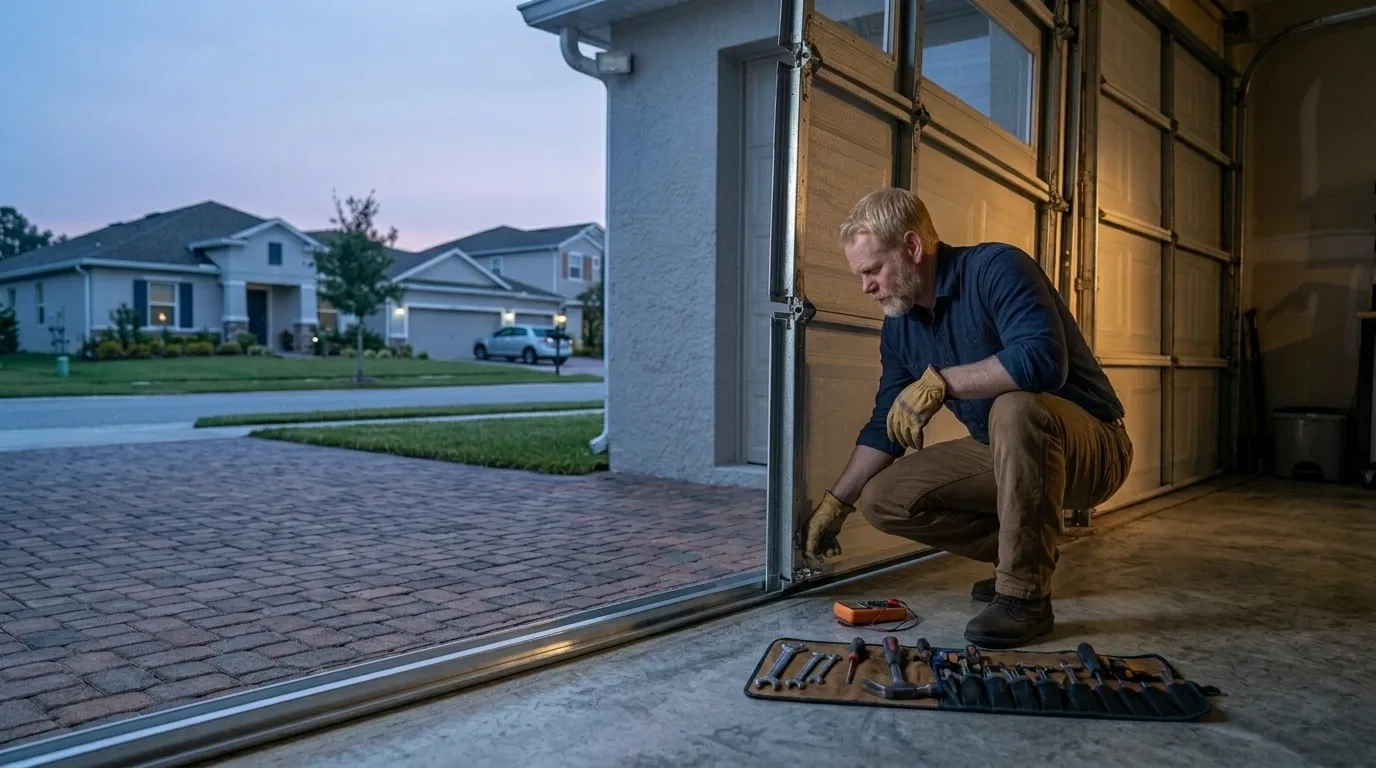
A tech checks the spring, cables, tracks, and opener in person and tells you plainly what is actually wrong.
-
3
Straight Price, No Surprises
You get a number before any work starts. It covers parts and labor, nothing added after the fact.
-
4
Fixed the Same Visit
Most repairs are done in one trip. If a part needs sourcing, we tell you that upfront instead of guessing.
How Long It Takes
We can't promise a number here without a truck in your driveway looking at the actual spring, track, or opener board, but we can tell you what drives the timeline in this town specifically. Most of Santa Clarita's housing went up between 1956 and 1999, with the heaviest concentration in the 1960s and 70s across the area's named neighborhoods. That means a lot of original hardware: torsion springs sized for doors that have since been swapped for heavier insulated panels, openers wired to circuits that were never meant to carry a modern unit's draw.
A straightforward spring swap on a door that's still original moves fast because the parts are common. A job where the track has been re-hung twice by different owners over 50-plus years takes longer, because we're often diagnosing three small problems stacked on top of each other instead of one clean failure. We tell you which kind of job you have before we start, not after.
One honest limitation: if your opener board is a discontinued model from a 1970s build and the part has to come from a specialty supplier, that lead time is out of our hands. We'll say so up front instead of guessing at a date we can't back.
How It Shows Up
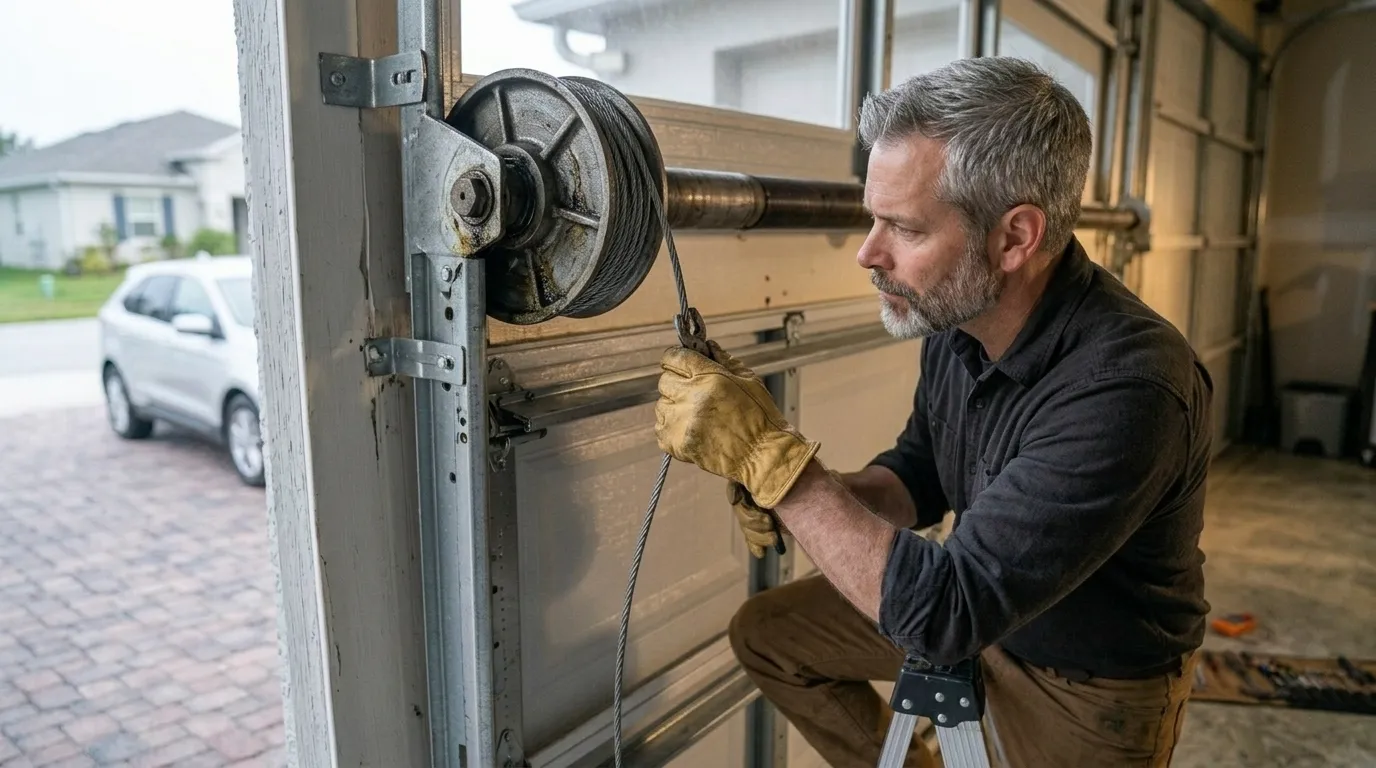
In a heat-moderate climate like this one, the failure pattern is less about ice and more about heat cycling and dust. Doors here don't fight snow load, but they do fight daily temperature swings that expand and contract steel track and dry out lubrication faster than owners expect. On the original-era doors common across this service area's 13 named neighborhoods, that shows up as a door that groans on the way up, a torsion spring that lets go without warning on a warm afternoon, or rollers that have worn oval instead of round from decades of dry travel.
Newer opener boards paired with older, heavier wood-composite panels from the 1970s-90s era are another common mismatch: the motor strains, the gears wear down early, and owners hear it as a slow grind before the belt or chain finally slips. None of this is exotic. It's what happens when a housing stock built mostly before 2000 keeps its original garage hardware for 40-plus years in a climate that never forces a full teardown, so small wear just accumulates instead of getting flagged.
The Cost of This Job
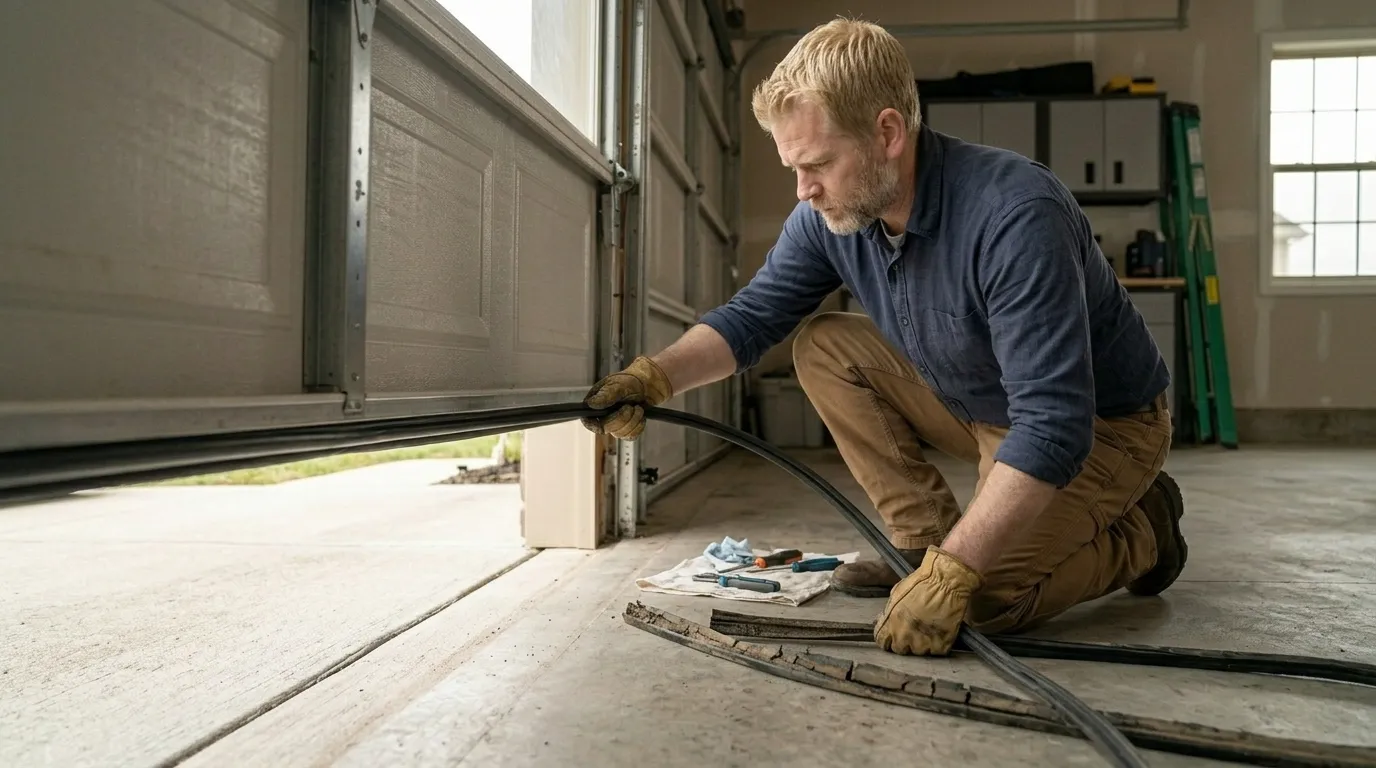
We're not going to hand you a number that isn't grounded in a real quote, because the range on this job depends entirely on what's inside the door - a single spring versus a full torsion conversion versus an opener that's simply past its working life. What we can say is what shapes the decision here: with median household income across the service area at $119,775 and roughly 19,719 owner-occupied houses in the area, most owners we work with are weighing a repair against a full door or opener replacement rather than deciding whether to fix it at all.
On an original door from the 1960s-70s era, that math often tips toward replacing the opener while keeping the door itself, since the door panel usually outlasts the motor. We'll tell you plainly when a repair is throwing money at a door that's near the end of its run, and when it isn't.
Why This Fails Locally
This isn't a generic wear-and-tear story - it's specific to what got built here and when. With median housing age landing around 1975 and the bulk of stock dating to the 1960s and 70s, a large share of Santa Clarita's roughly 33,875 households are running garage hardware that was never designed for the openers, insulation, or daily-use patterns of a modern household. Add a heat-moderate climate that never forces a hard seasonal reset, and small failures - a spring losing tension, a track pulling out of alignment, a roller wearing thin - don't get caught early.
They just get louder over years. Areas closer in, from Canyon Country two miles out to Valencia four miles west and Newhall just southwest of that, share this same building era, so the pattern repeats block to block rather than being one street's bad luck. Farther out toward Stevenson Ranch or Castaic, the same age bracket applies, which is why the fix usually isn't unusual - it's the same original-hardware story wearing out on schedule.
Talk to a Technician Before You Book
Describe what the door is doing and get a straight answer on what it likely needs.
Other Ways We Can Help
Jobs Like Yours
Recent work from this service line.
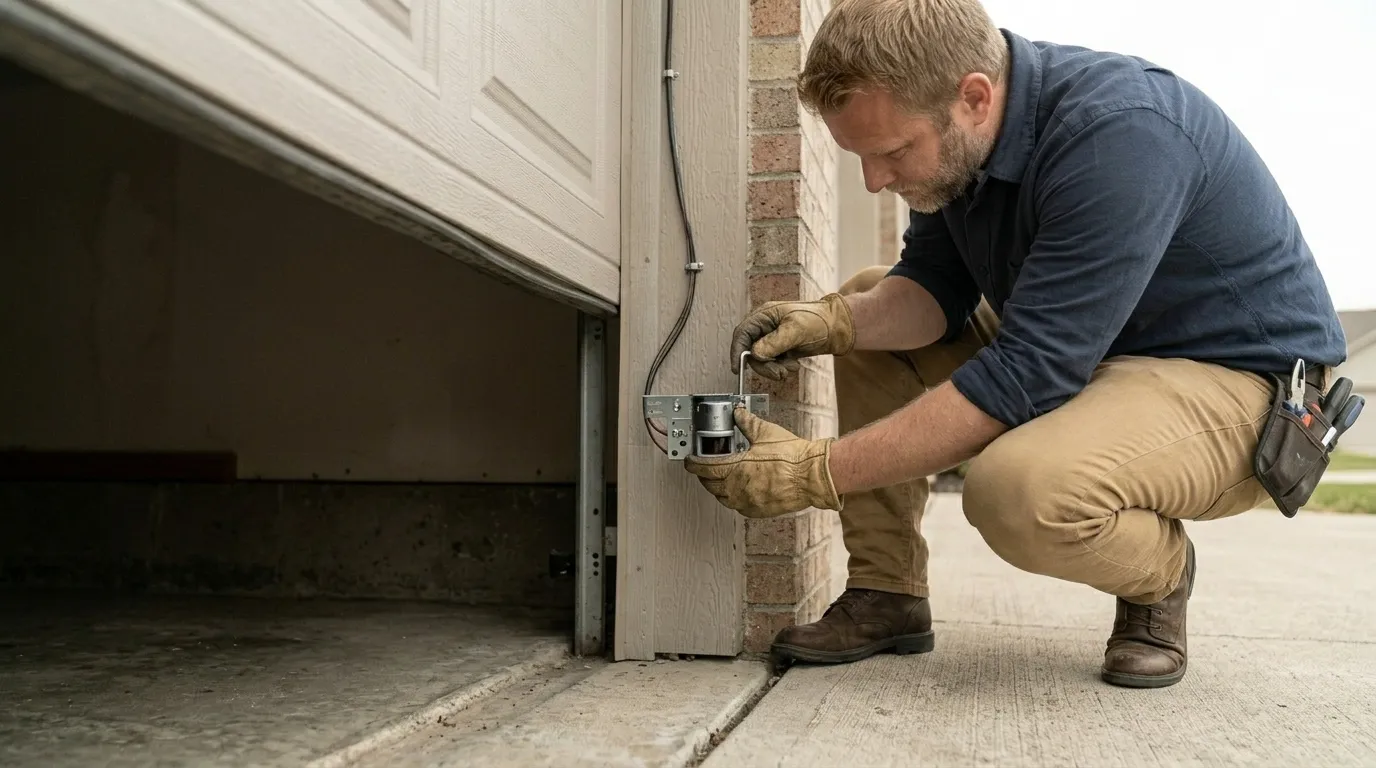
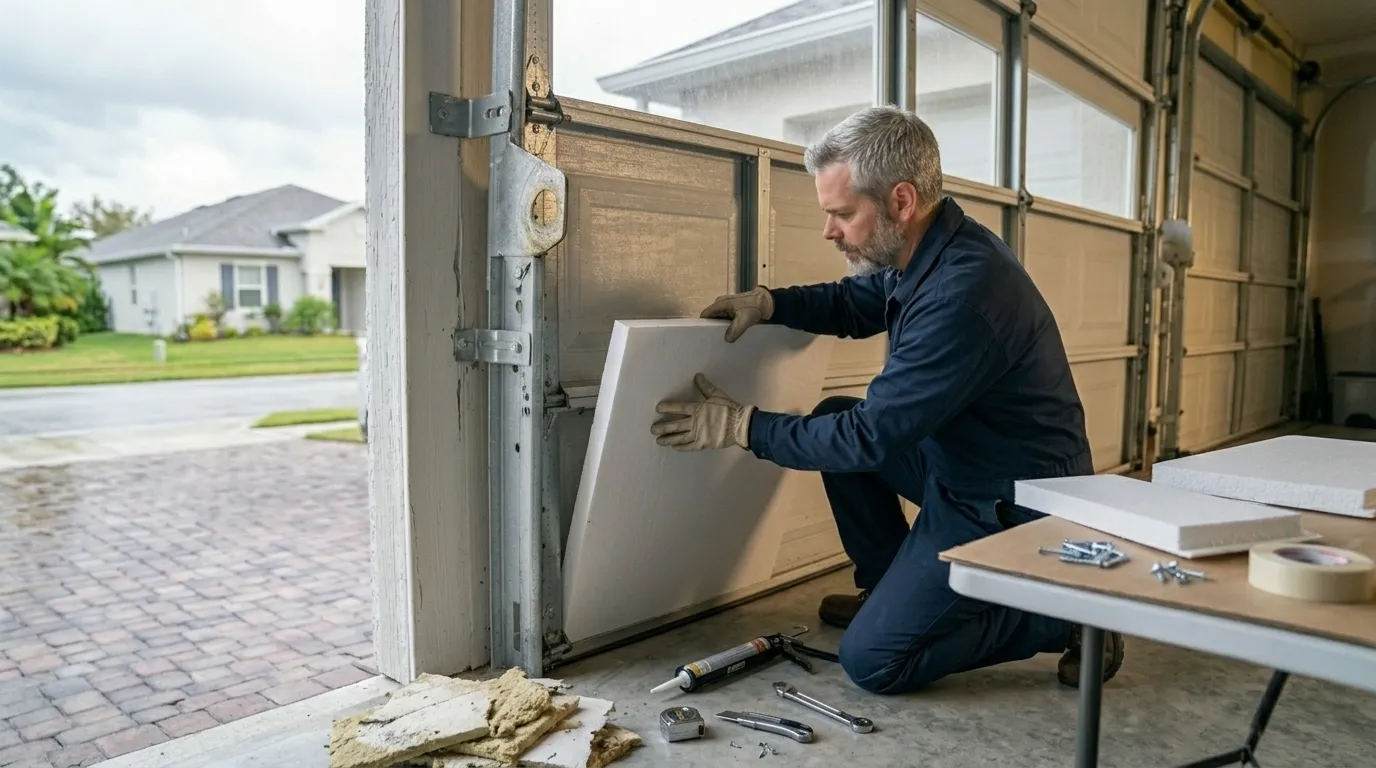
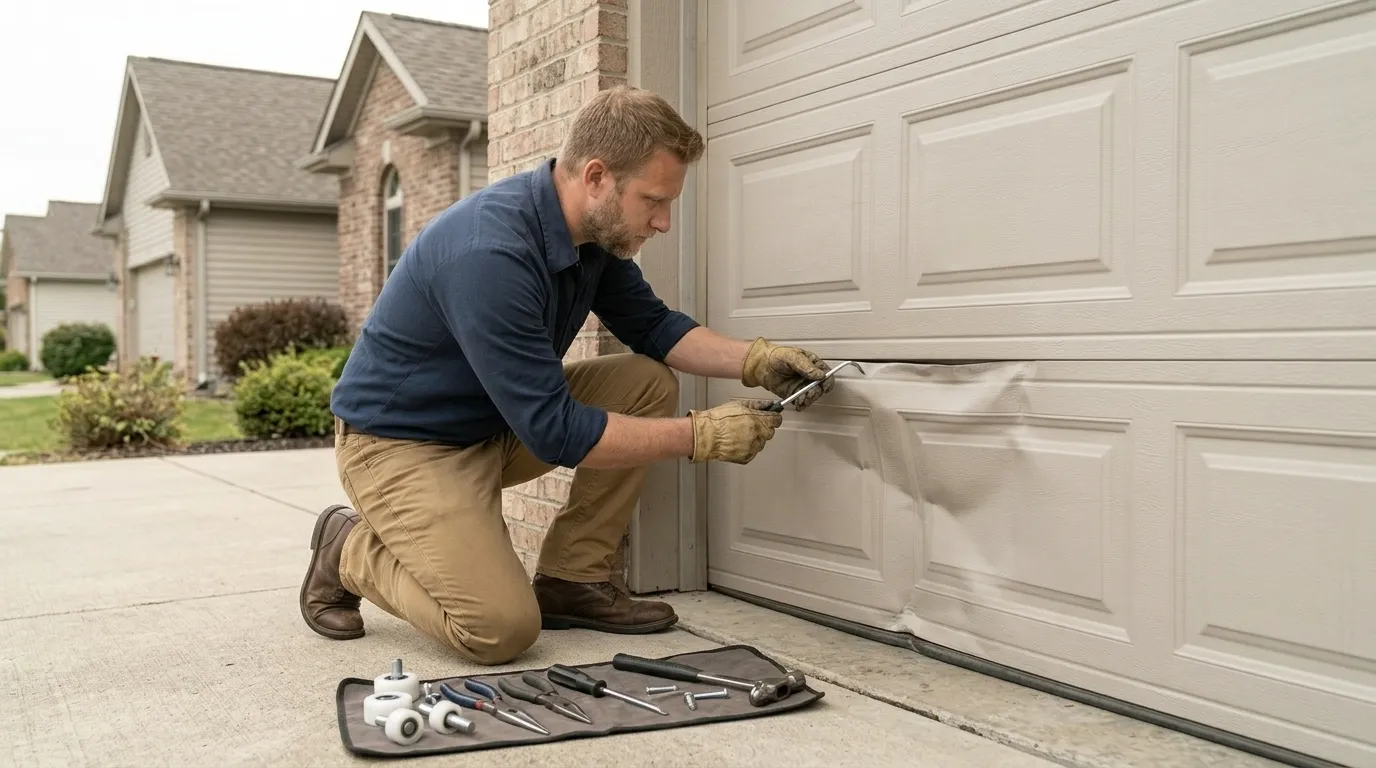
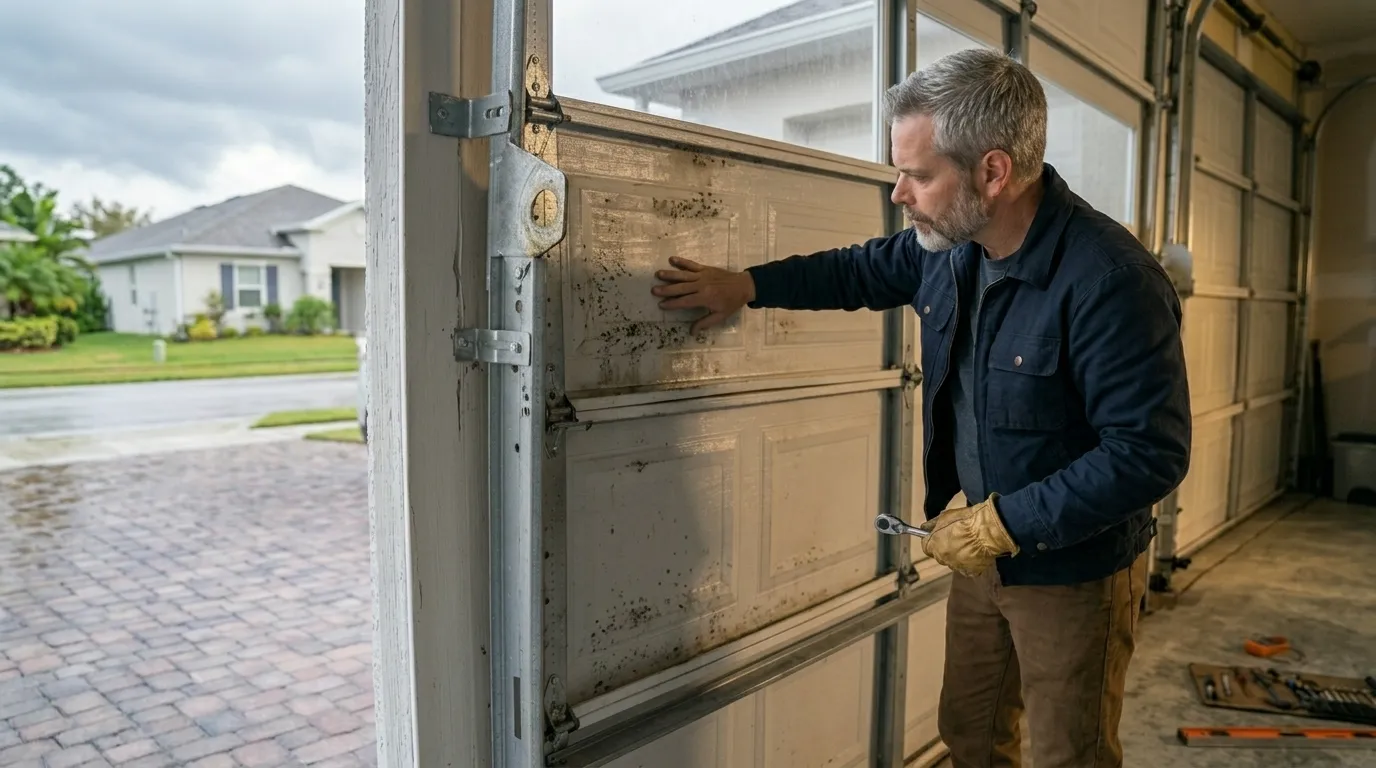
Why Santa Clarita Calls Us
Frequently Asked Questions
Why did my spring snap with no warning?
Torsion springs on original-era doors here are rated for a set number of open-close cycles, and heat cycling in this climate wears them down steadily rather than in one dramatic event. By the time it lets go, it's usually been thinning for years. There's no reliable way to predict the exact day, which is why we check spring condition on every call even if that's not what you called about.
Is my opener too old to repair?
Depends on the board, not just the age. Some 1970s-90s era openers still have parts available; others don't, and a repair there means chasing a discontinued part instead of fixing the unit. We'll check the model before quoting anything so you're not paying for a search that goes nowhere.
Do I need a new door or just a repair?
If the panel itself is sound and it's the spring, track, or opener causing trouble, repair usually makes sense. If the door is an original from the 1960s-70s era with warped panels or hardware nobody stocks anymore, replacement often costs less over time than repeated patchwork. We'll walk you through which category your door falls into.
Need Garage Door Repair Built Around Santa Clarita's Own Housing Stock?
Call now for straight answers on cost and timing.