
Service
Garage Door Service Built for Santa Clarita's Older Housing Stock
Service work on the torsion springs, openers, and tracks common to Santa Clarita's 1960s-70s houses, from Canyon Country to Valencia and Newhall.
- Licensed & Insured
- Same-Area Service Calls
- Upfront Pricing
What Happens When You Call
-
1
Call or Request a Quote
Tell us what the door is doing and roughly how old the house is - that alone points us toward the likely part before a truck leaves.
-
2
On-Site Diagnosis
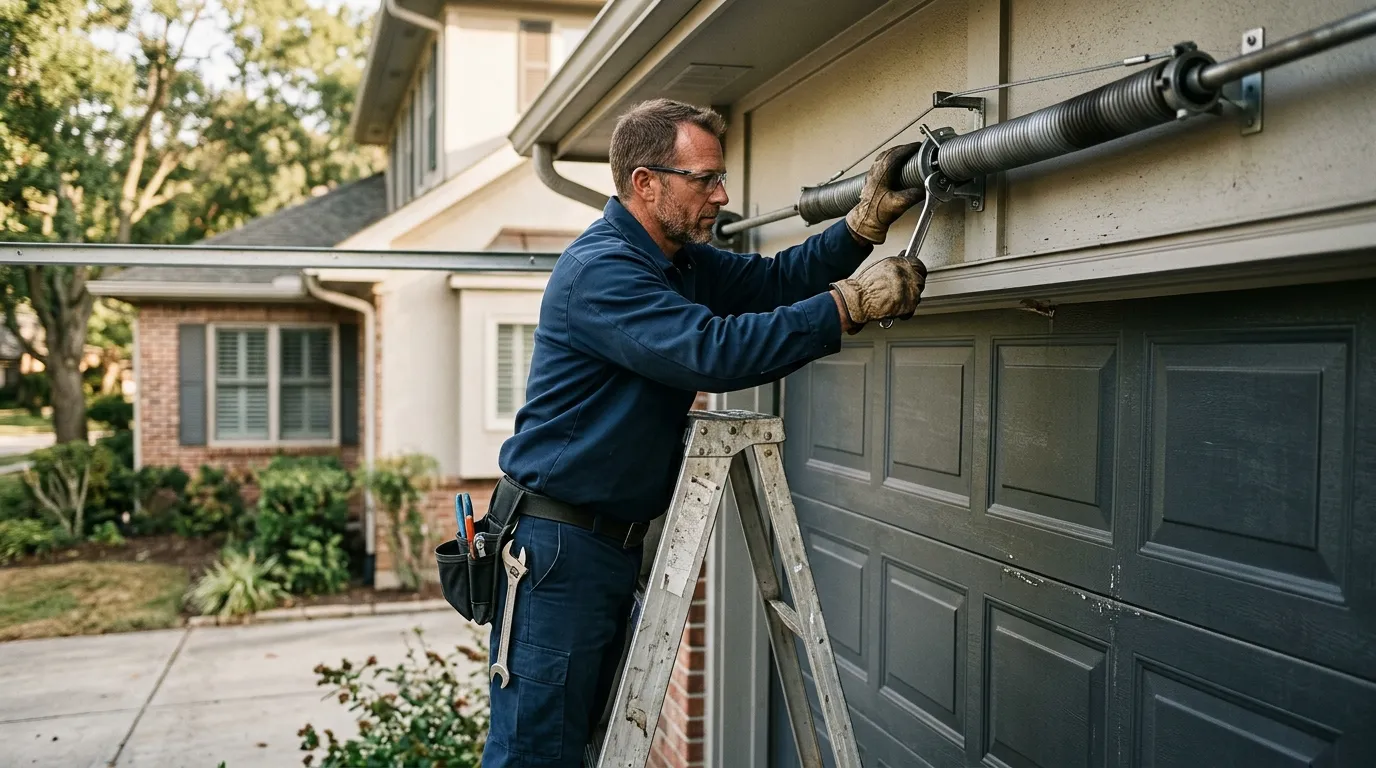
A tech checks the spring, cables, tracks, and opener in person and tells you plainly what is actually wrong.
-
3
Straight Price, No Surprises
You get a number before any work starts. It covers parts and labor, nothing added after the fact.
-
4
Fixed the Same Visit
Most repairs are done in one trip. If a part needs sourcing, we tell you that upfront instead of guessing.
How Long It Takes
Most of the service calls we run in this area involve doors and openers that are older than the house next door thinks they are. Housing here mostly went up between 1956 and 1999, with a lot of it clustered in the 1960s and 70s across the thirteen named areas that make up this valley - Canyon Country, Saugus, Valencia, Newhall and the rest.
That matters for how long a job takes, because a door from that era usually has hardware that's been replaced piecemeal over the decades: a newer opener bolted to an old track, a spring swapped once in the 90s and never touched since. Diagnosing that setup takes longer than a straightforward newer-build service call, because nothing on the door matches its own paperwork.
A tune-up on a door that's been kept up reasonably well is a short visit. A door where the rollers, cable, and opener gears have all been quietly failing at different rates takes longer, because each part gets checked on its own before anything gets adjusted. We don't rush that part - a torsion spring under tension is not something you guess about.
We can't give you a single number here without seeing the door. What we can tell you is that the age of the housing stock in Canyon Country and Saugus specifically means we budget extra time for hardware mismatches, not less.
How It Shows Up
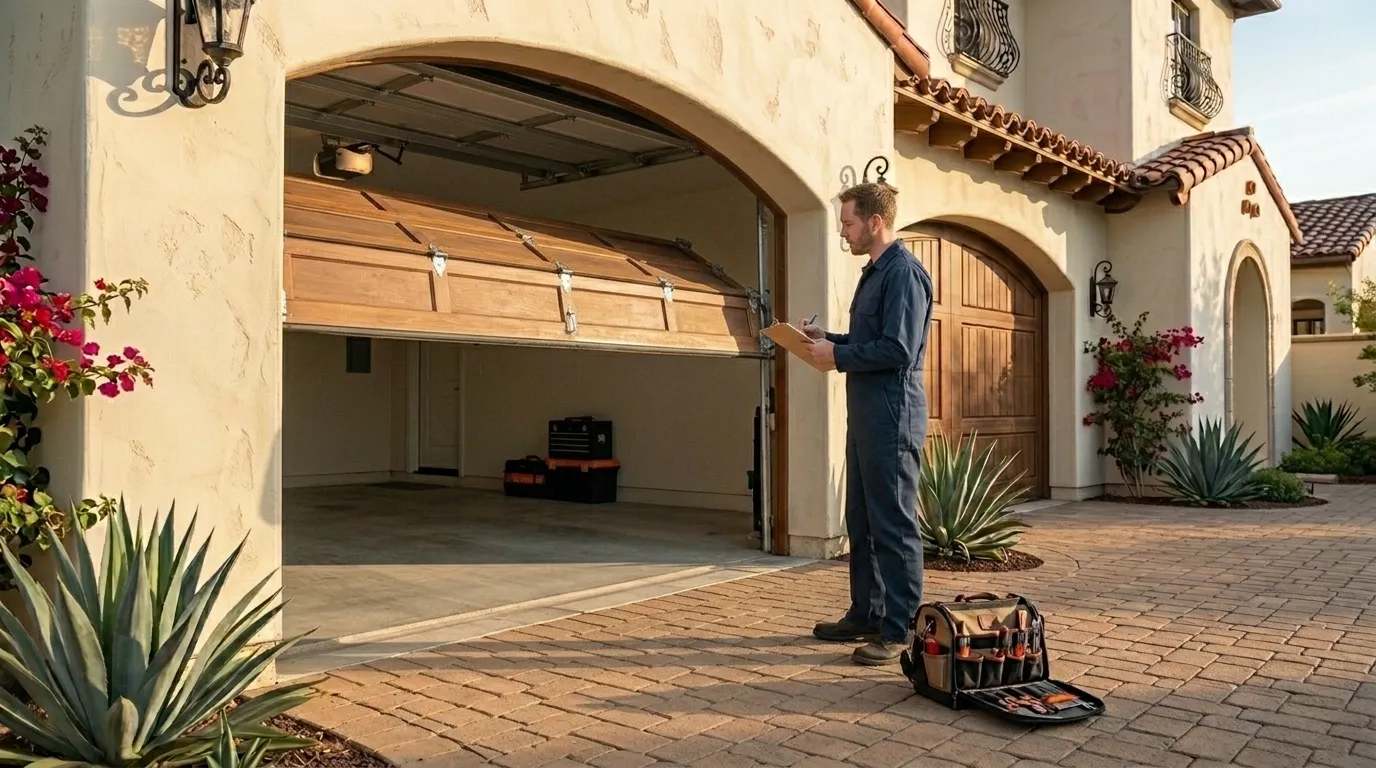
The failure pattern we see most in Santa Clarita houses built in that 1956-1999 window isn't a door that stops working all at once. It's a door that gets slower, louder, and less even over months, because the original torsion spring and the rollers wear out on a schedule set by how the house was built, not by how often the door gets used. In a house from Newhall or Valencia with the original steel rollers still in the track, you'll hear a grinding or grabbing sound before the door ever refuses to open.
Our climate here runs moderate heat rather than the deep freeze-thaw cycles that crack hardware in colder regions, so the failures we see aren't cold-snap spring breaks. They're heat-and-dust related: dry bearings, lubricant that's baked out of the rollers and hinges, and opener gears that have been running dry for years because nobody's oiled anything since the door went in. That shows up as a door that hesitates halfway, or an opener that strains and clicks before it moves the door at all.
One limitation worth naming: if the opener has already stripped its internal gear, a service visit won't un-strip it. At that point you're looking at an opener replacement, not a tune-up, and we'll tell you that on site rather than charge you for a lube job that won't hold.
The Cost of This Job
We don't have a set price to publish here, and we're not going to make one up. What we can tell you honestly is what drives the cost up or down on a service call in this area. A door that's original to a 1960s or 70s build in Canyon Country or Saugus often needs more labor time than a newer door, because the parts don't match current stock sizes and something usually has to be adapted rather than swapped in directly.
Median household income across the service area sits around $119,775, and with roughly 19,719 owner-occupied houses in a service area of about 33,875 households, we see a wide range of what people are willing to spend to keep an older door running versus replace it outright. Neither choice is wrong.
A tune-up on a door with good bones is cheaper than a new door every time. A door with a cracked panel and a stripped opener gear is a different conversation, and we'll say so rather than nickel-and-dime a service call that won't fix the real problem.
We quote after we look at the door, not before. Anyone who gives you a firm number over the phone for a door they haven't seen is guessing, and on a house this old, guessing gets expensive.
Why This Fails Locally
This isn't a generic garage door problem - it's specific to what's on the ground here. With most housing in the service area dating to between 1956 and 1999, and the bulk of it built in the 1960s and 70s across areas like Canyon Country, Saugus, Valencia, and Newhall, a huge share of the doors we service are running original or near-original torsion hardware that was never designed for a fifty-plus-year service life.
Our moderate-heat climate band doesn't crack springs the way a hard freeze does, but it does something just as damaging over time: it bakes lubricant out of rollers, hinges, and opener chains faster than owners expect, especially on south-facing garages that catch sun most of the day. Add in the dust that blows through this valley, and you get grit working into dry bearings - a combination that speeds up wear on exactly the kind of aging hardware that's common in houses from that build era.
A door in a newer development might go a decade without a service call and be fine. A door original to a 1960s or 70s house here, sitting on 1970s track hardware, dry from years of valley heat, is the one that fails on a Saturday. That's the pattern we're built around, not a general warning about garage doors.
Talk to a Technician Before You Book
Describe what the door is doing and get a straight answer on what it likely needs.
Other Ways We Can Help
Jobs Like Yours
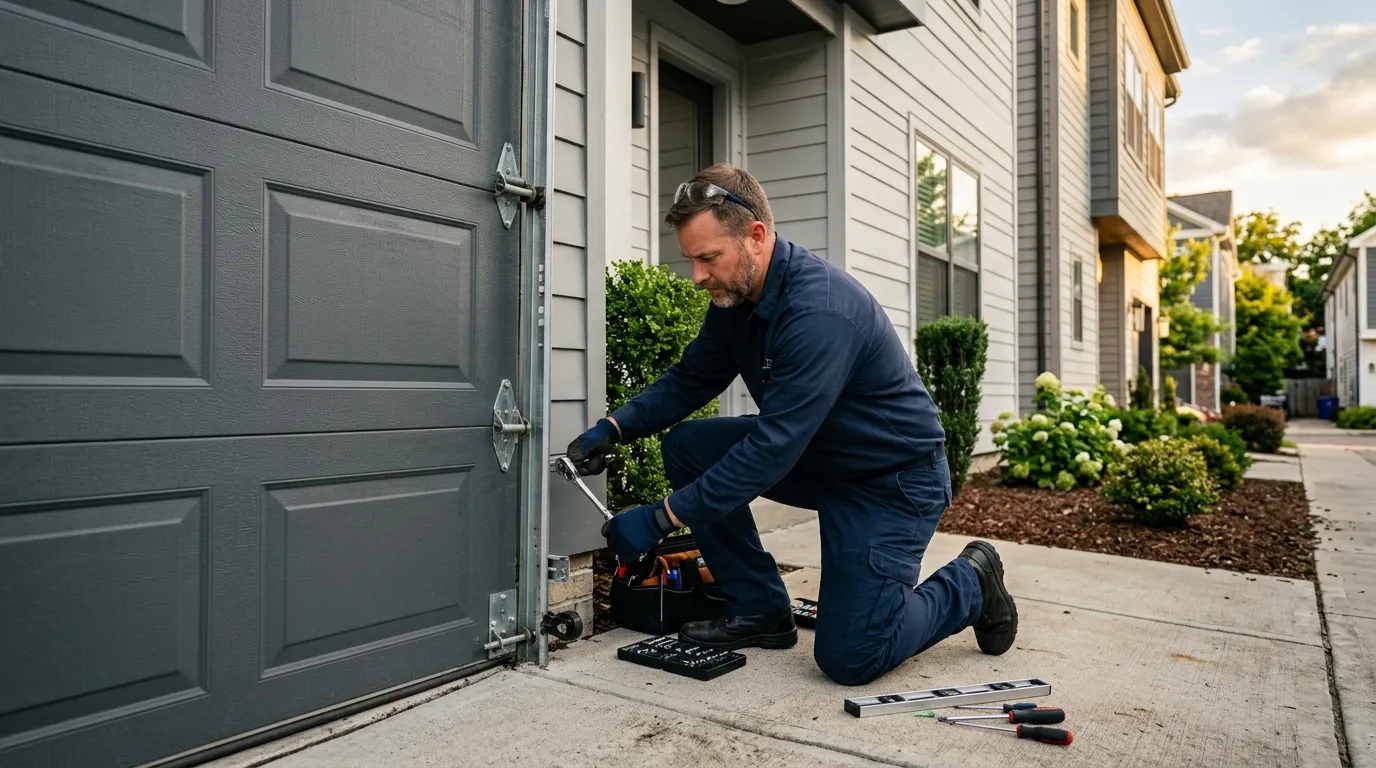
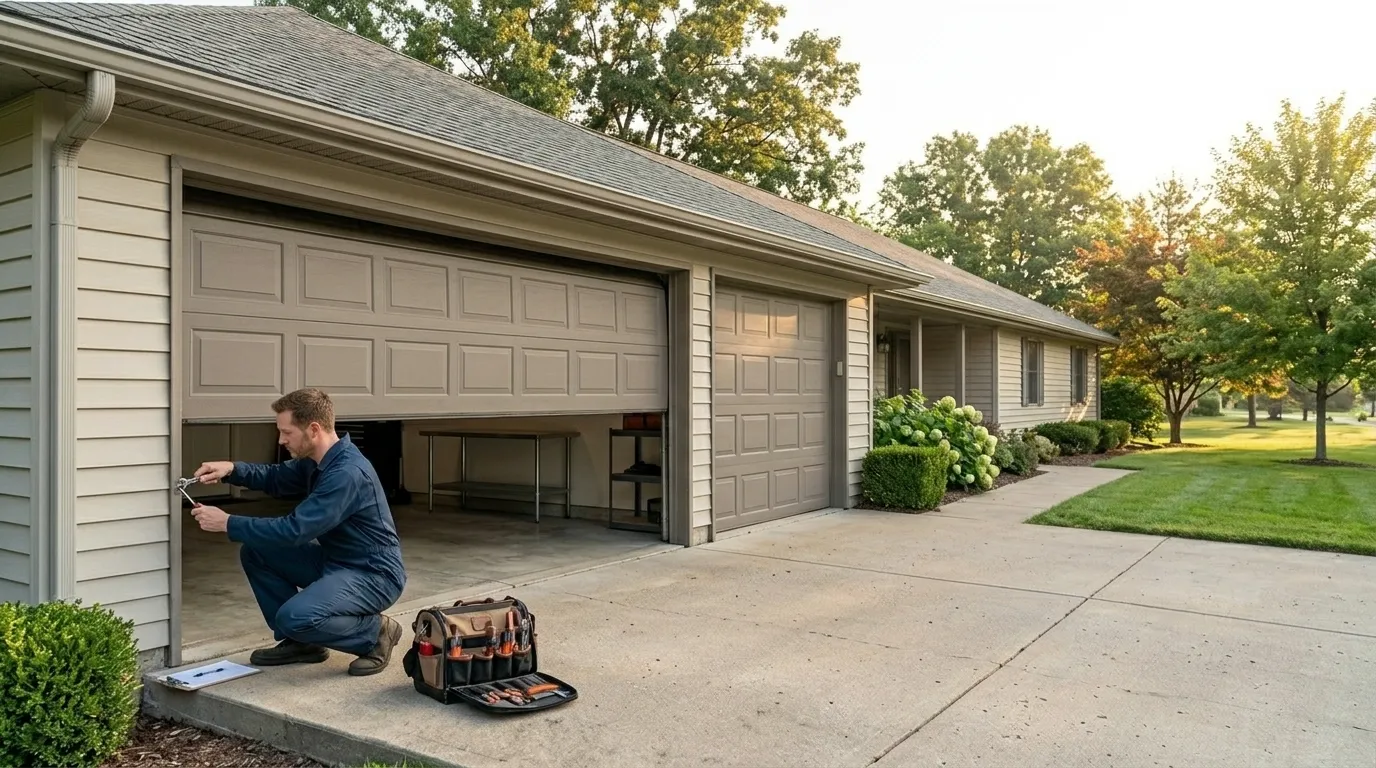
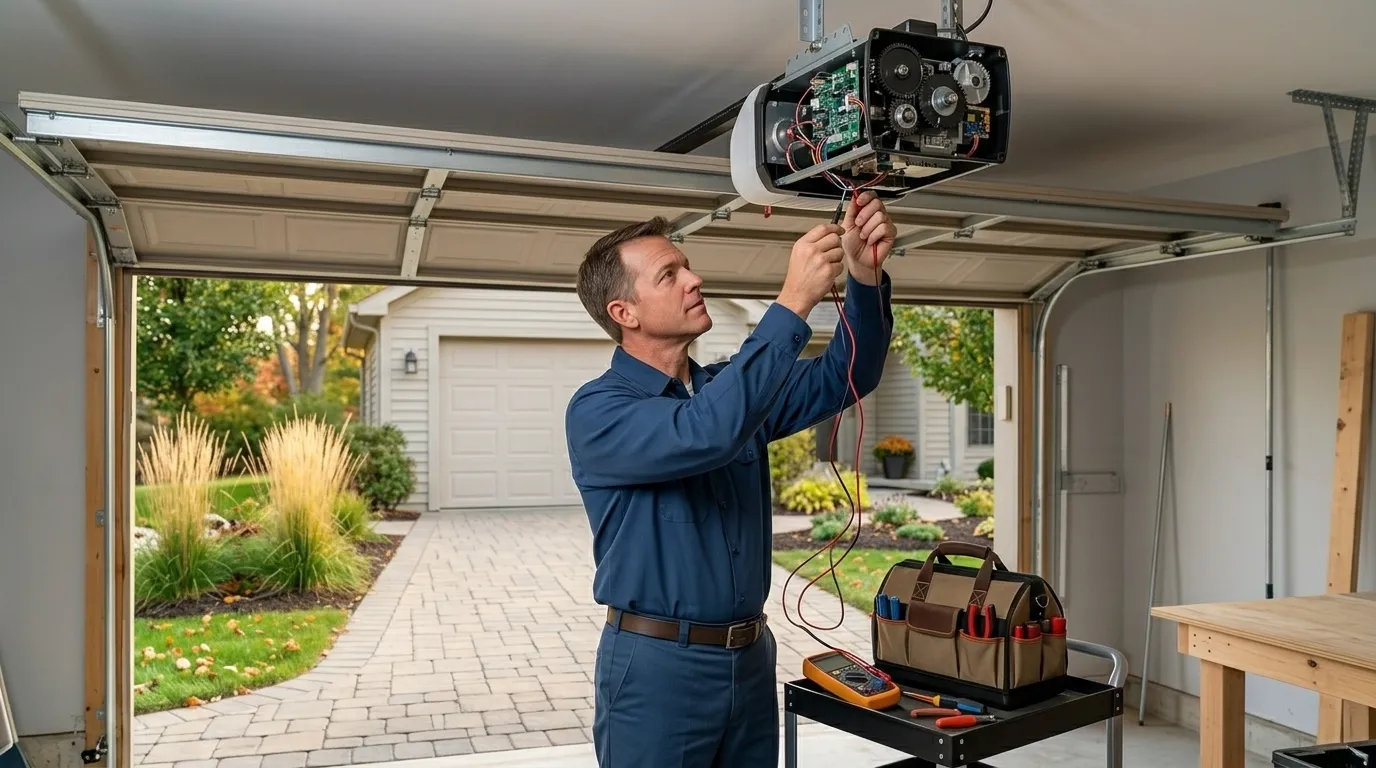
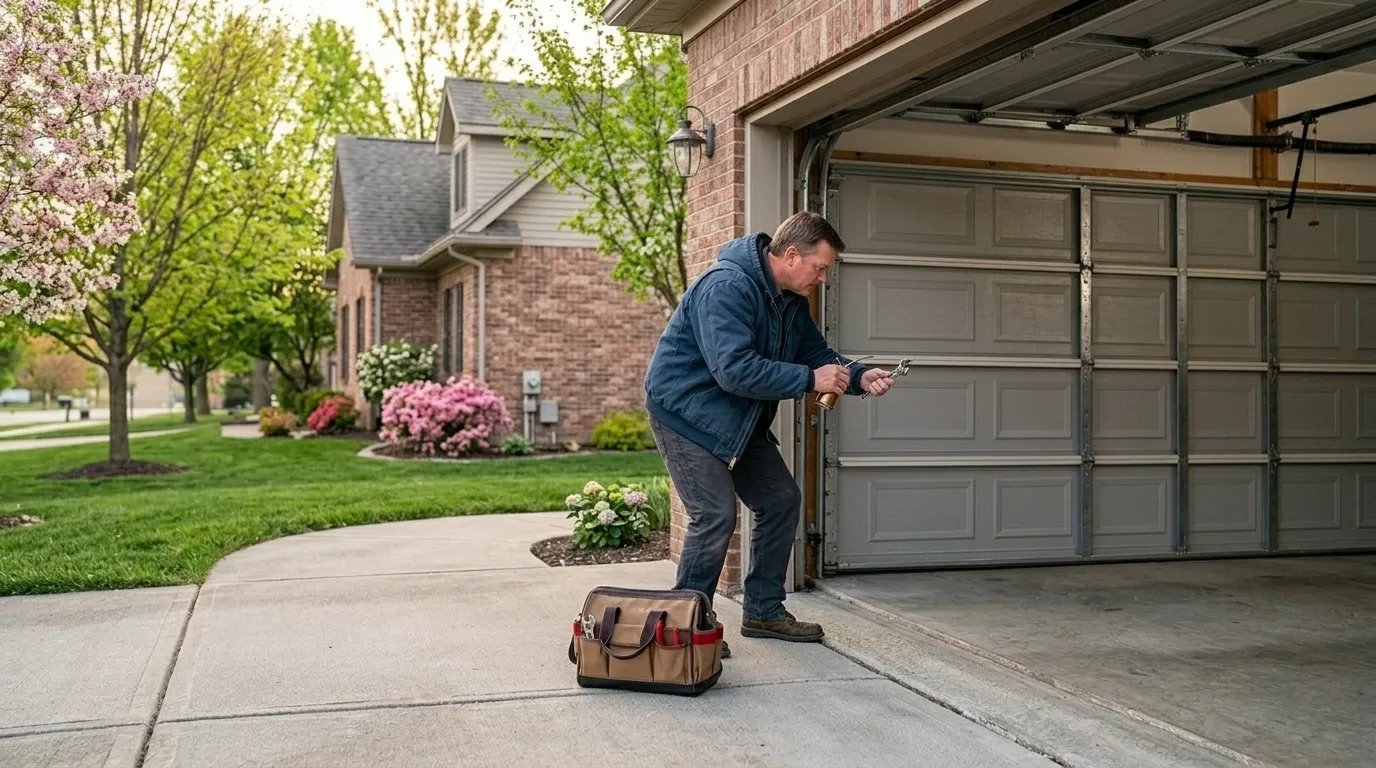
Recent work from this service line.
Why Santa Clarita Calls Us
Frequently Asked Questions
Why does my garage door make noise only in the afternoon?
Heat is the usual reason. Metal track and hinges expand slightly as the garage heats up during the day, and if the lubricant on the rollers has already dried out - common on older hardware from the 1960s-70s housing stock here - that expansion is enough to turn a quiet door into a grinding one until things cool back down.
Is it worth servicing an old opener or should I replace it?
Depends on what's actually worn. If the gears inside are stripped, no amount of servicing fixes that and you're looking at replacement. If it's just dry chain, loose hardware, or a misaligned sensor, a service visit usually gets more life out of it. We'll tell you which one you've got before we do any work.
Do you service doors in Canyon Country and Saugus?
Yes, along with the rest of the Santa Clarita service area. Those two areas in particular have a lot of housing from the 1960s and 70s, which is the era we see the most torsion spring and roller wear in.
How often should a garage door actually get serviced?
We don't have a fixed interval to give you since it depends on the door and how it's been maintained. What we can say is that houses built in this valley's 1956-1999 window with original hardware tend to need attention sooner than newer builds, mostly from years of dry lubricant and dust in the track.
Need Garage Door Service Built for Santa Clarita's Older Housing Stock?
Call now for straight answers on cost and timing.