
Santa Clarita Garage Door Guide
Deciding If Your Old Garage Door Still Has Life Left
A look at when a 1960s-70s Santa Clarita garage door is worth repairing versus replacing, based on this area's housing age and moderate heat conditions.
- Licensed & Insured
- Same-Area Service Calls
- Upfront Pricing
What Local Conditions Do
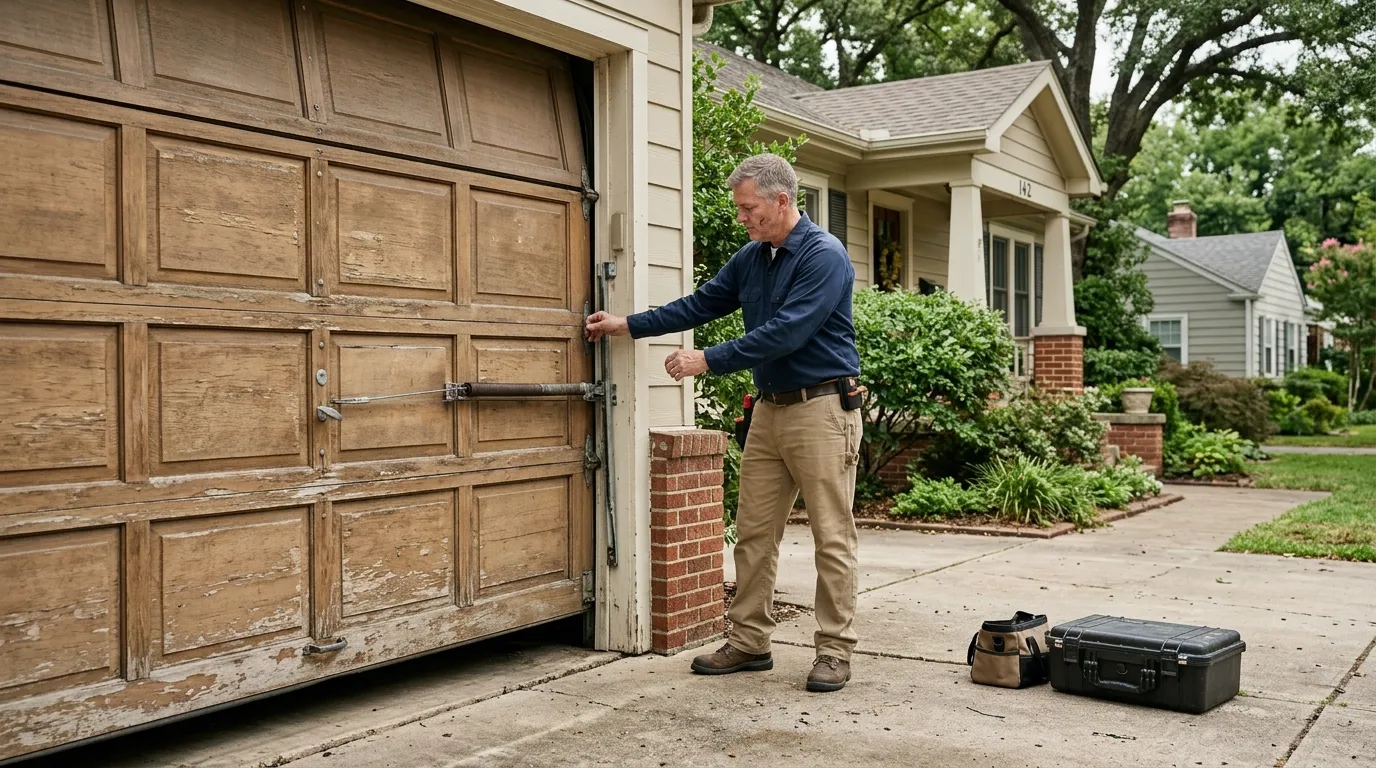
Most of the doors we look at here went in when the neighborhood around them was built, and across Santa Clarita that means anywhere from 1956 to 1999, with the median house dating to 1975. That's a long run of doors, springs, and openers that were never meant to last past a couple of decades, let alone five or six.
The area sits in a moderate heat band, not the harsher desert swings you get further out. That matters for a door's metal panels and track alignment.
Steel doesn't expand and contract as violently here as it would somewhere with bigger daily temperature spikes, so an original steel door isn't automatically warped or racked just because it's old. A door that's stayed level and hasn't seen major denting can often still be running on its factory track thirty or forty years later, which is unusual in harsher climates but not unusual here.
What does wear out regardless of climate is the stuff that moves: torsion springs, rollers, cables, the opener's gears. Those fail on a cycle count, not a calendar, so a door used twice a day for 40 years has seen a lot more wear than a garage that gets opened once a week.
The Cost of This Job
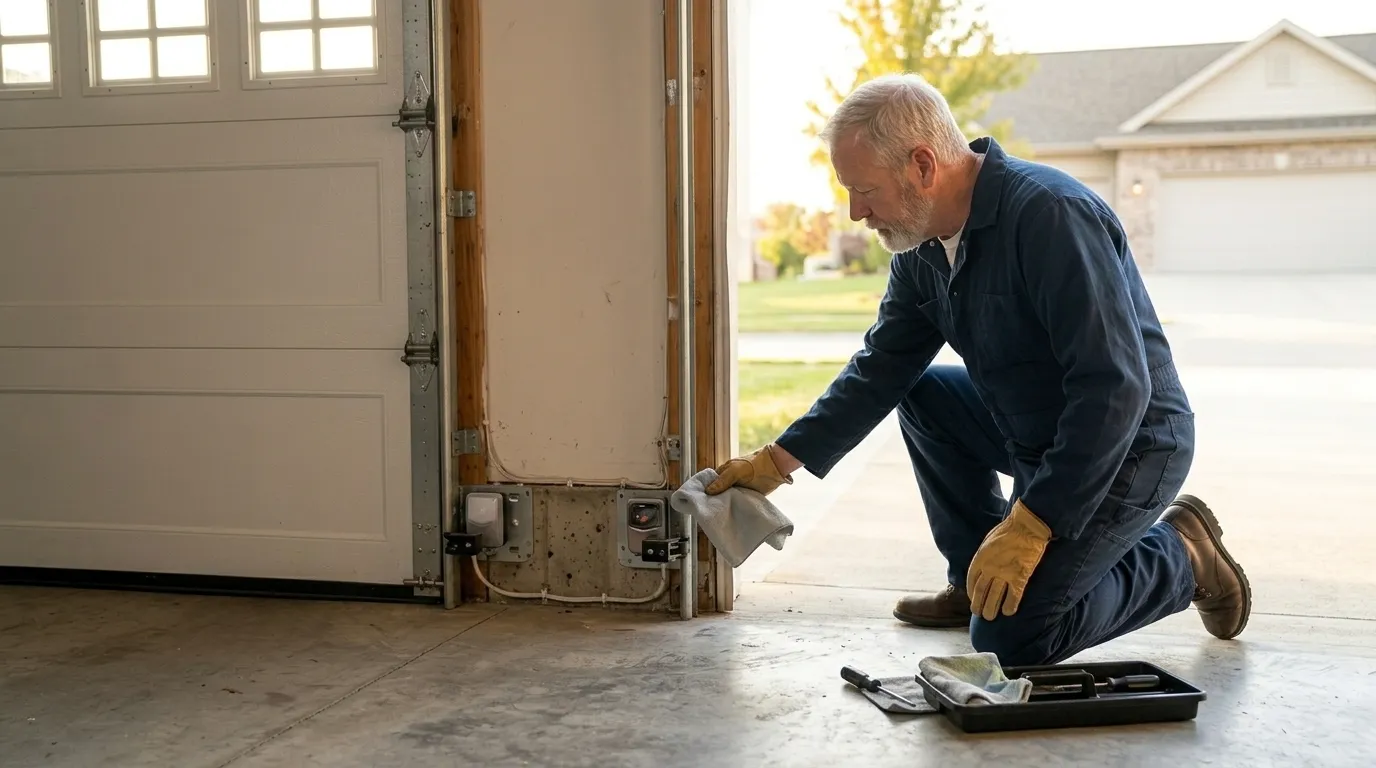
We're not going to hand you a number here we don't have, because it depends on what's actually wrong and what the door is made of. What we can tell you is how to think about it. A torsion spring, a set of rollers, a broken cable, a bent track section - these are parts jobs on a door that's otherwise sound, and they're a fraction of what a full door and opener replacement costs.
Where it gets expensive is when the door itself is the problem: warped panels, rusted-through sections, hardware that's been discontinued so long the part has to be custom-fit. Given the median household income in this area sits around $119,775, most owners we talk to can afford a full replacement if that's genuinely the right call - but a lot of them would rather not spend that money on a door that just needs a spring and a tune-up.
Our honest limitation: we don't try to force a repair on a door frame that's rusted out or a panel that's cracked through. Past that point, patching it costs you money now and again in a year.
When Waiting Is Fine
Not every noisy or stiff door needs a same-week call. If the door still opens and closes on its own power, tracks straight, and the only issue is noise or a slow start, that's usually wear on rollers or hinges - annoying, not urgent. You can run it a few more weeks without much risk.
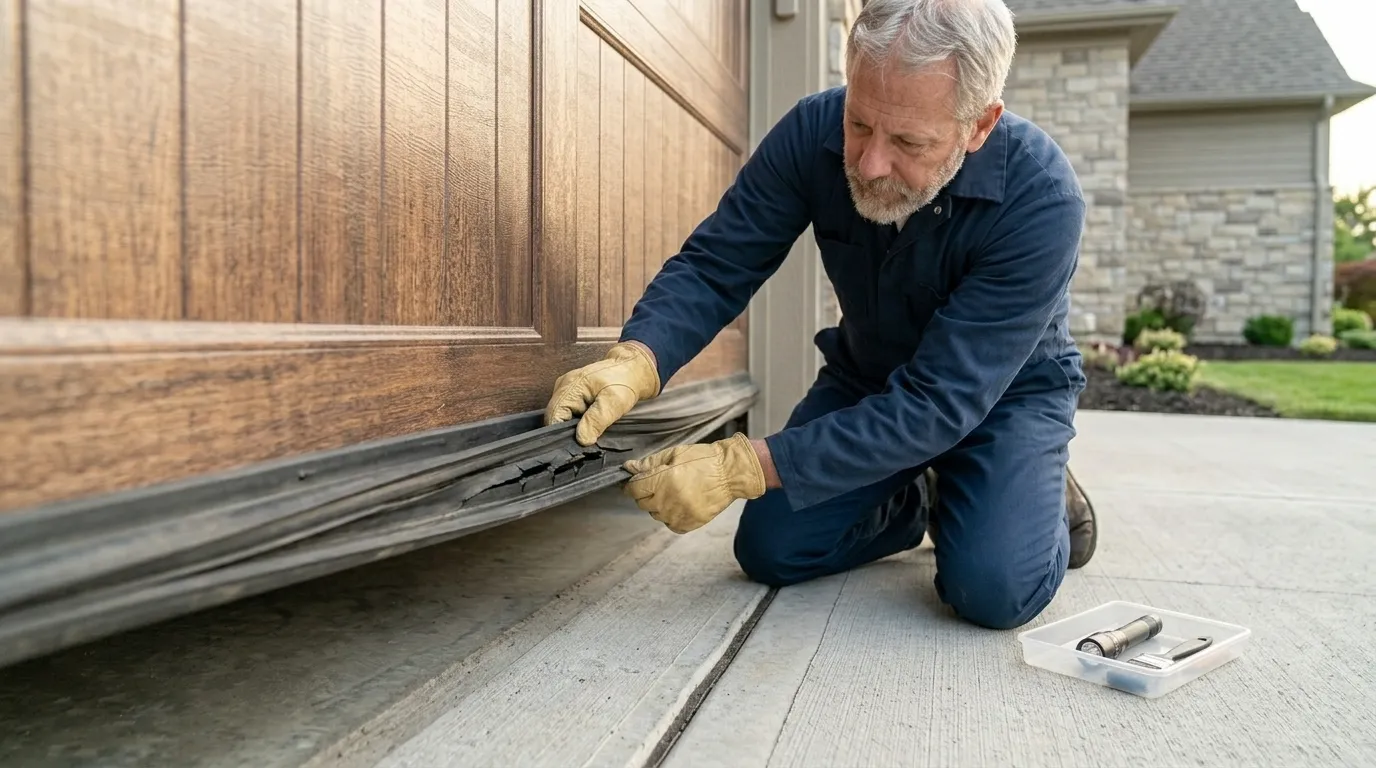
Waiting is also fine if you're dealing with cosmetic wear on an original 1970s-era door - faded paint, a dent that doesn't affect the track, weatherstripping that's cracked but still sealing most of the gap. None of that threatens the door's structure or your safety.
What shouldn't wait is a spring that's already snapped, a cable that's frayed, or a door that's come off one side of its track. Those get worse fast and can turn a $200 repair into a door replacement if the panel gets bent trying to force it. If you're not sure which category you're in, that's a five-minute phone conversation, not a guessing game.
The Problem
With 19,719 owner-occupied houses sitting inside a service area of 33,875 households, and most of that housing stock dating from the 1960s through the 1970s, we see the same pattern over and over: original hardware that was fine for the first fifteen years and has been quietly degrading ever since.
The most common failure isn't dramatic. It's a torsion spring that's been wound and unwound tens of thousands of times finally giving out, usually on a cold morning when the metal is stiffest. Right behind that is worn rollers grinding a track that was never realigned after the house settled.
The harder problem is diagnosing which of these is a quick fix and which one is a sign the whole door assembly is at the end of its run. A door built in the mid-1970s that's had two or three spring replacements over the decades has probably earned a retirement, even if it still opens today.
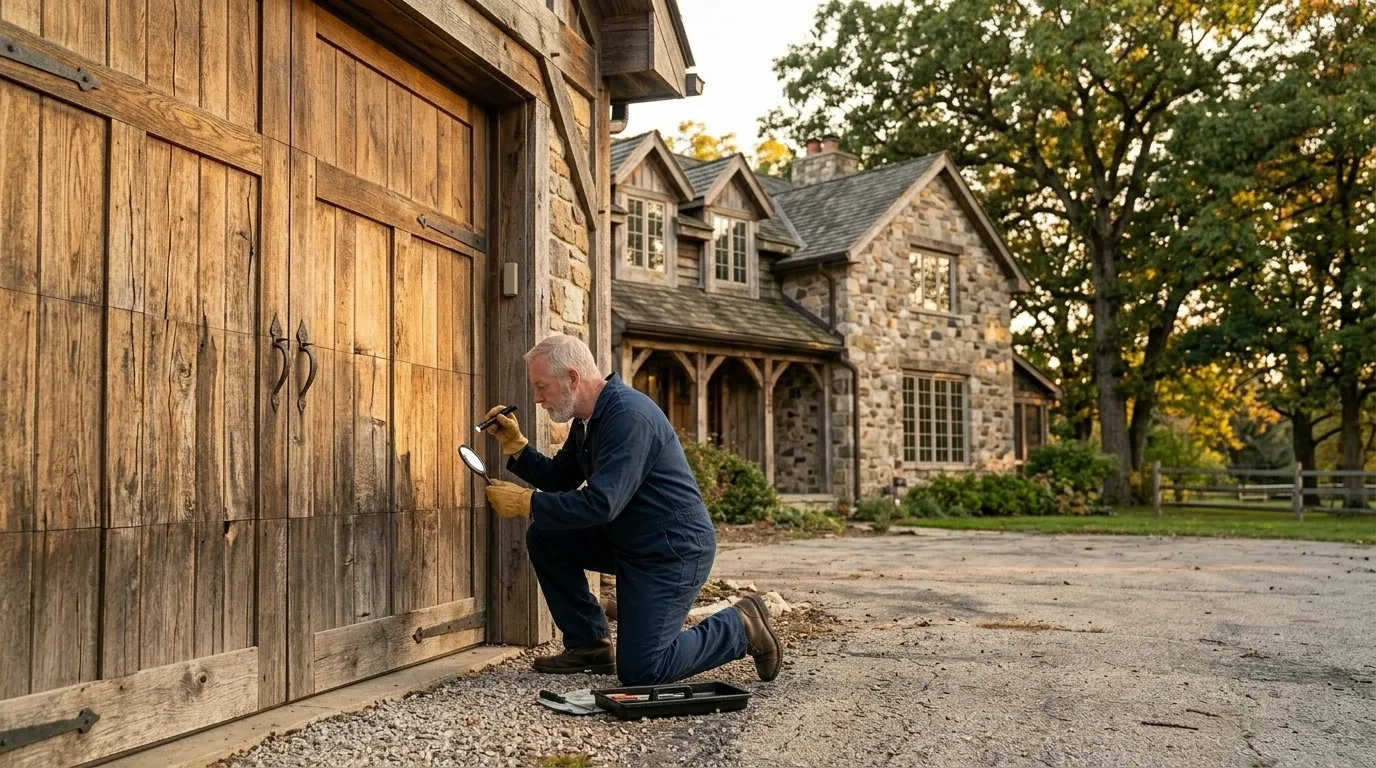
One that's original but lightly used might have another decade in it. There's no way to tell without actually looking at the door, which is why we don't quote sight-unseen.
How We Can Help
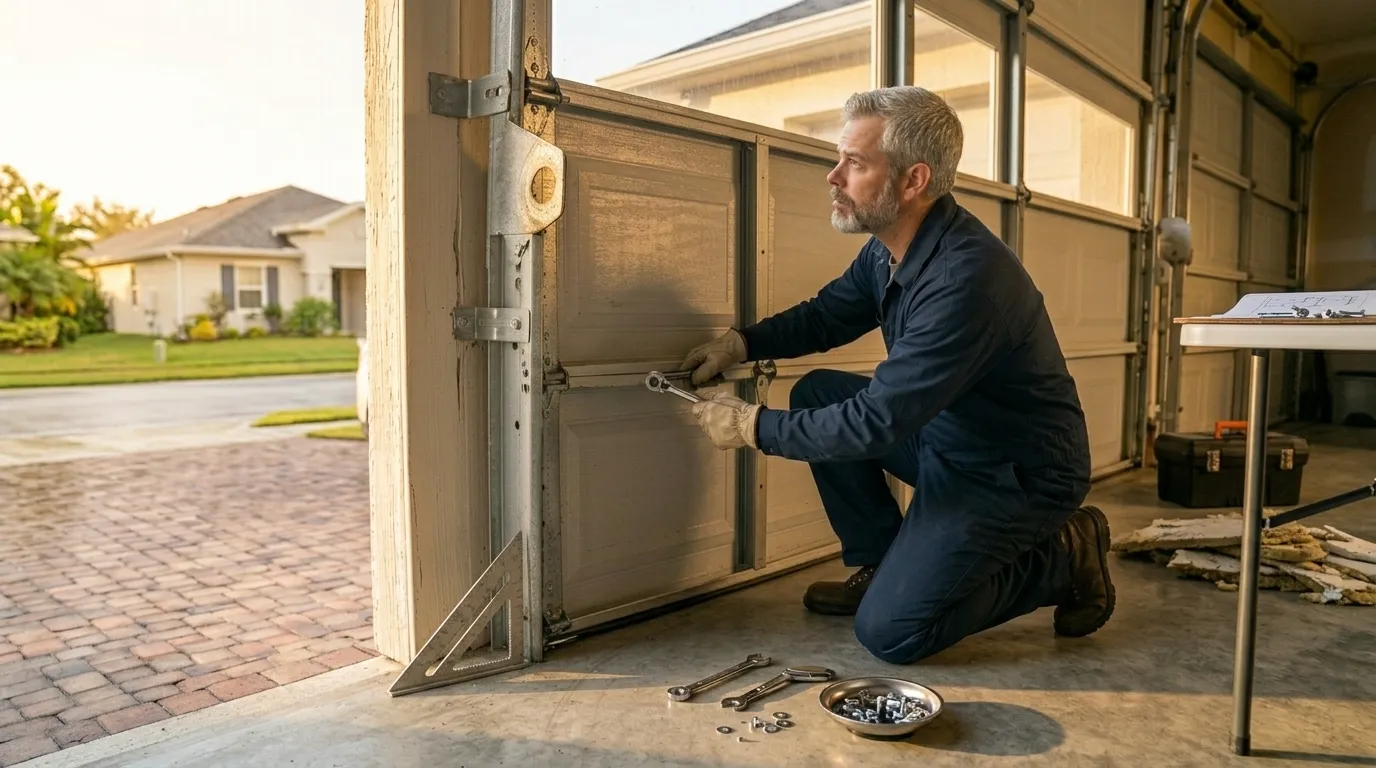
Garage Door Repair
Springs, cables, tracks, rollers, and openers fixed by a tech who explains the problem before touching anything.
Learn more →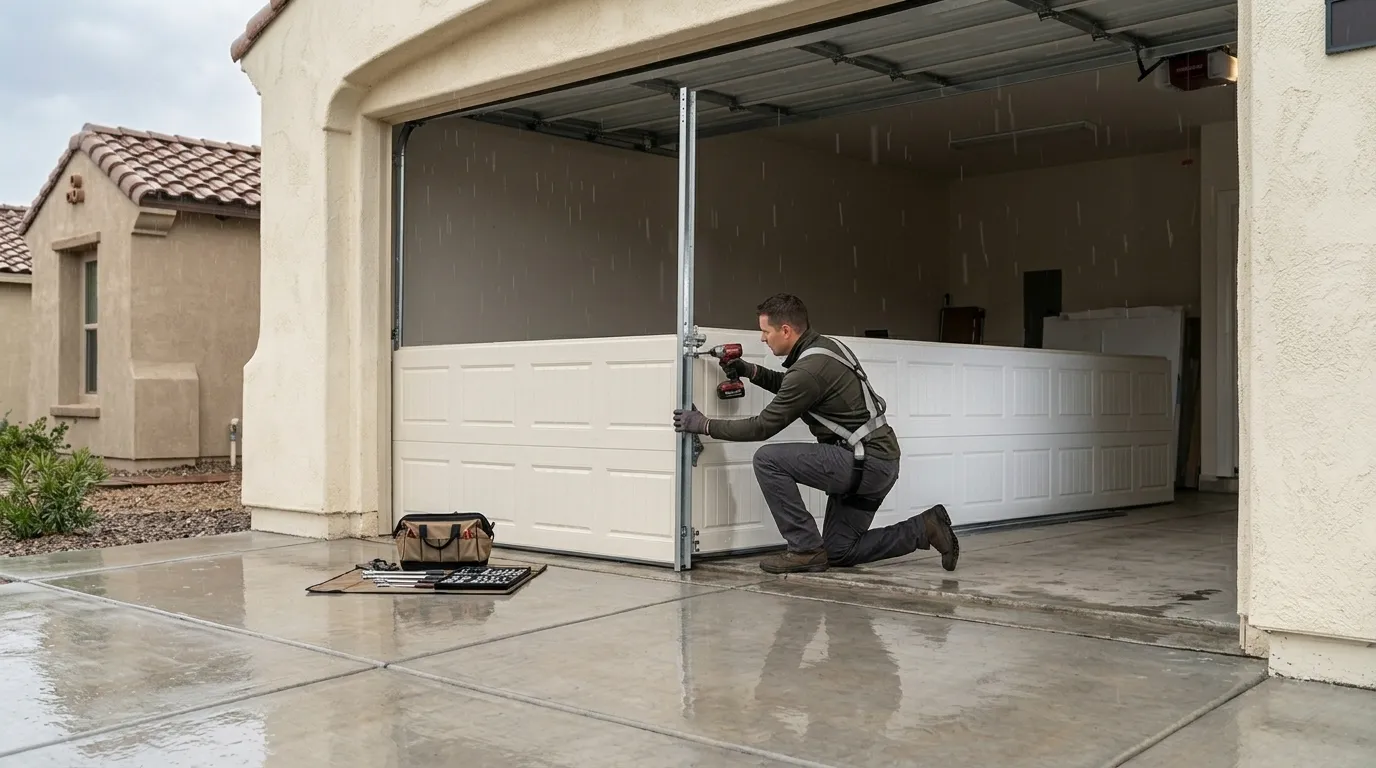
Garage Door Installation
New sectional doors sized and installed for the housing stock actually built in this area.
Learn more →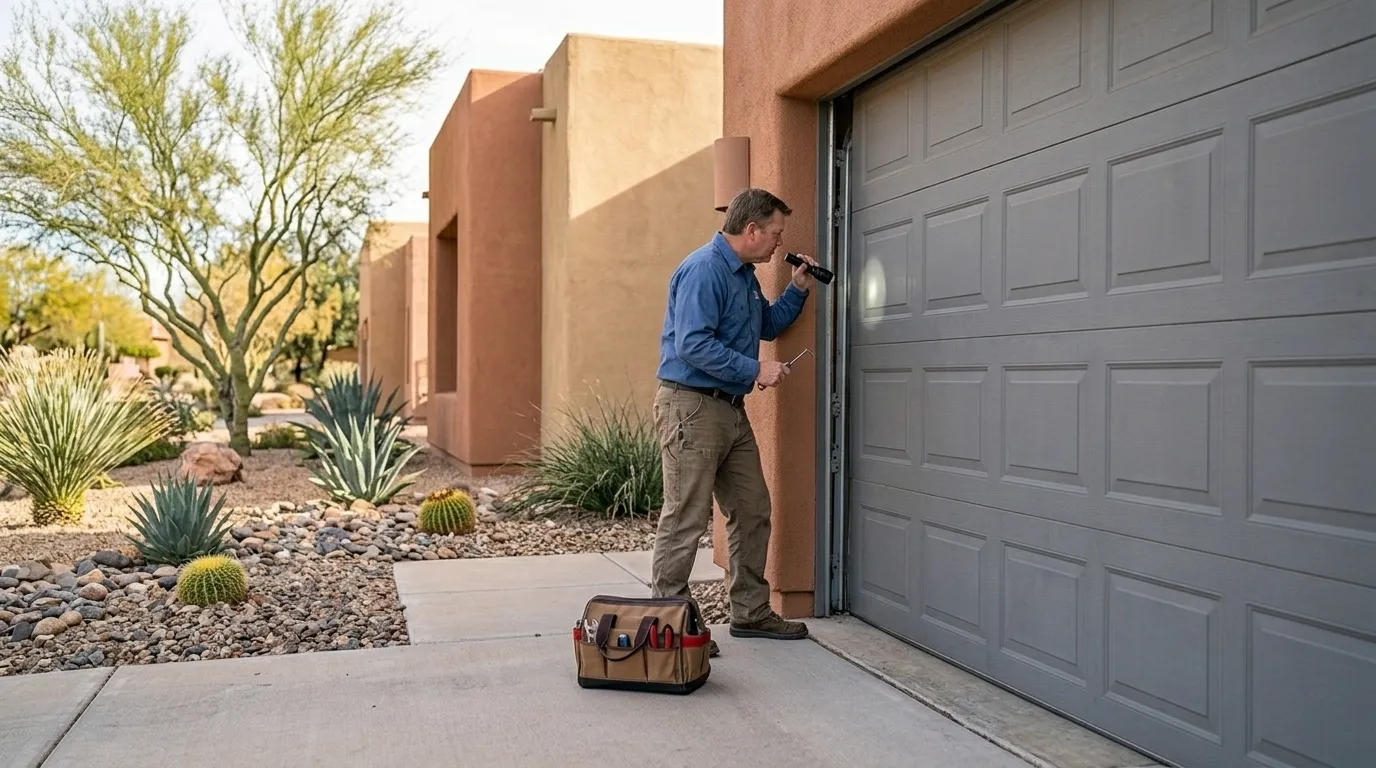
Garage Door Service
Tune-ups, lubrication, and safety checks that catch a small problem before it becomes a service call.
Learn more →Frequently Asked Questions
Is it worth fixing a garage door from the 1970s?
Often yes, if the frame and track are still straight and the panels aren't rusted through. A lot of doors from that era in Santa Clarita are still structurally sound; it's the springs, cables, and rollers that fail, and those are straightforward parts replacements on an otherwise good door.
How do I know if my door is too old to repair?
Look at the track alignment and panel condition first. If the door runs straight and the steel isn't rusted or cracked, age alone isn't a reason to replace it. Repeated spring failures, a warped panel, or a bent track are the signs it's time to talk replacement instead of another patch job.
Does Santa Clarita's climate wear out garage doors faster?
Not especially. This area sits in a moderate heat band rather than an extreme one, so steel doors don't see the aggressive expansion and contraction that shortens door life in harsher desert climates. Wear here tends to come from cycle count and age of hardware, not heat damage.
Have a Door That Needs a Second Opinion?
Call and describe what it is doing - we will tell you what it likely is.