
Santa Clarita Garage Door Guide
What That Noise From Your Garage Door Is Actually Telling You
Grinding, popping, or slapping garage door sounds mean different things in Santa Clarita's 1960s-70s tract housing. Here's how to tell a real problem from a noisy nothing.
- Licensed & Insured
- Same-Area Service Calls
- Upfront Pricing
What Local Conditions Do
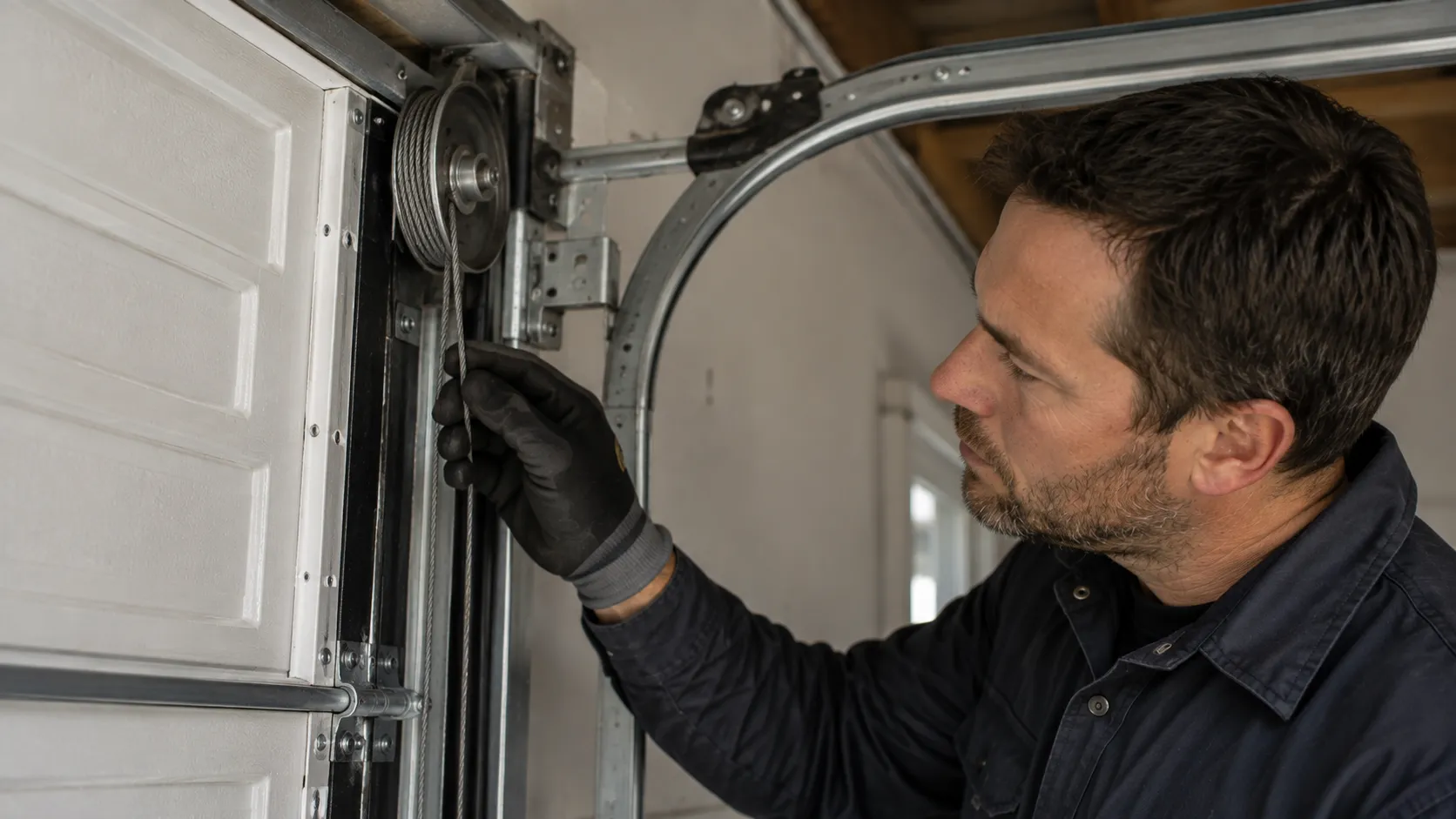
Most houses in this service area went up between 1956 and 1999, with the bulk of the stock dating to the 1960s and 70s across the thirteen named neighborhoods we cover. That matters for noise because a door built to specs from forty or fifty years ago behaves differently than a door installed last year. Steel tracks warp slightly with age, lag bolts back out of aging jamb wood, and the factory lubricant on original hardware turns to a hard, dry film long before anyone notices a problem.
The climate here sits in a moderate heat band, not an extreme one. That means the metal in your track and rollers isn't going through the violent expansion-and-contraction cycles you'd get somewhere with hard freezes and hot summers back to back.
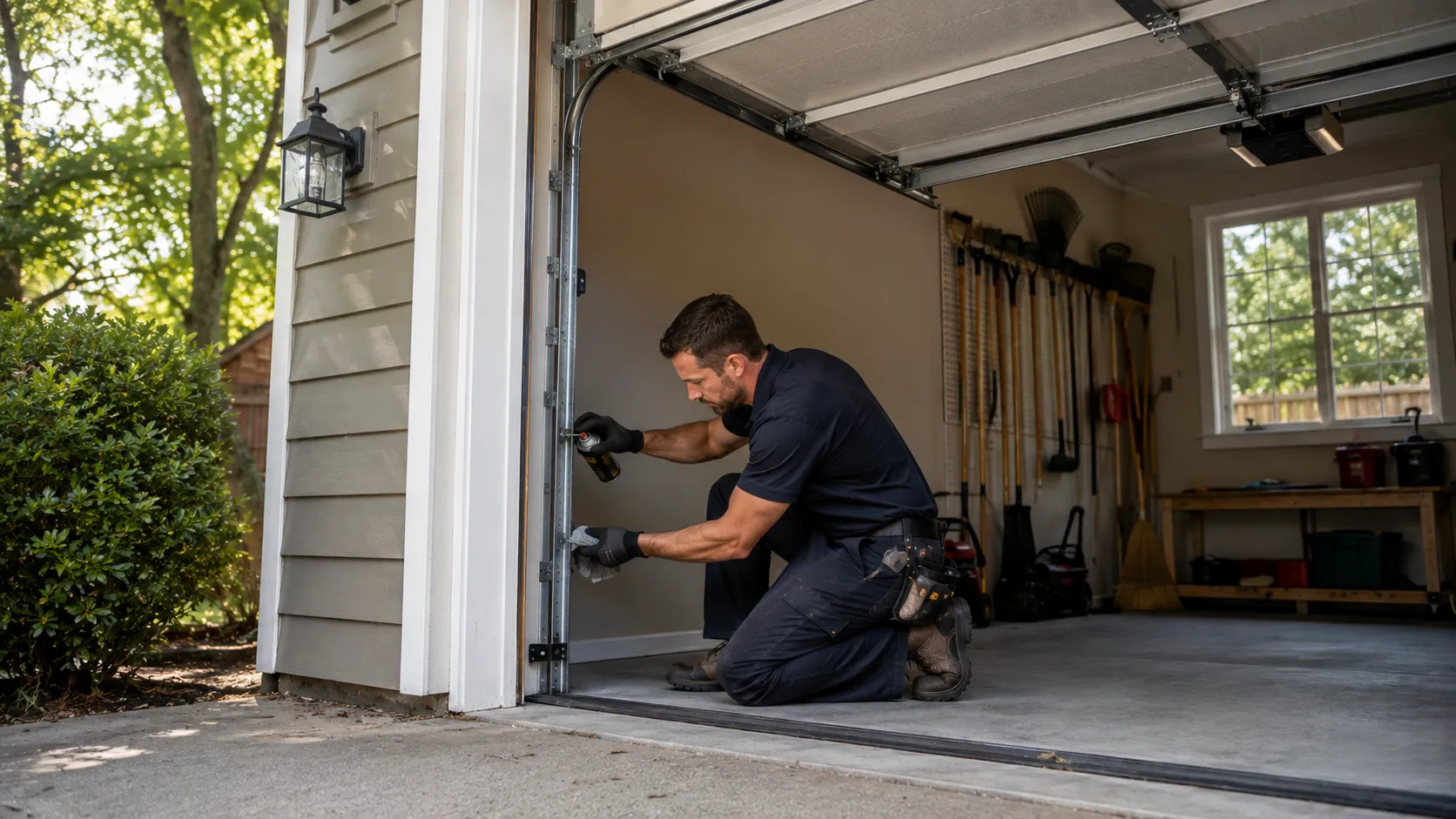
Around here, the more common driver is dust and dryness working into moving parts over a long, slow stretch of dry months, not sudden temperature shock. A squeal that shows up in July is usually dry rollers baking in a hot garage, not metal fatigue from a freeze-thaw cycle you don't really get in this area.
The Cost of This Job
We're not going to give you a number here we don't have, but here's what actually moves the price on a noise call in this area. With 19,719 owner-occupied houses in this service area built mostly before 1980, a lot of garages still run the original torsion springs and drums that came with the house. Original hardware from that era isn't always a straight swap for what's on the shelf today - sometimes the drum size or the spring wind is discontinued, and that turns a simple fix into a bracket or track replacement instead of a five-minute part swap.
A newer door on newer track is usually the cheaper visit: tighten, lubricate, done. An original door from the 1960s or 70s tract-built stock common across this area is more likely to need a part that has to be matched or replaced outright. At a median household income of $119,775 across this area, most owners we talk to choose full replacement of aging hardware once we're already in there, rather than paying twice for patch repairs on parts that are already at the end of their life.
When Waiting Is Fine
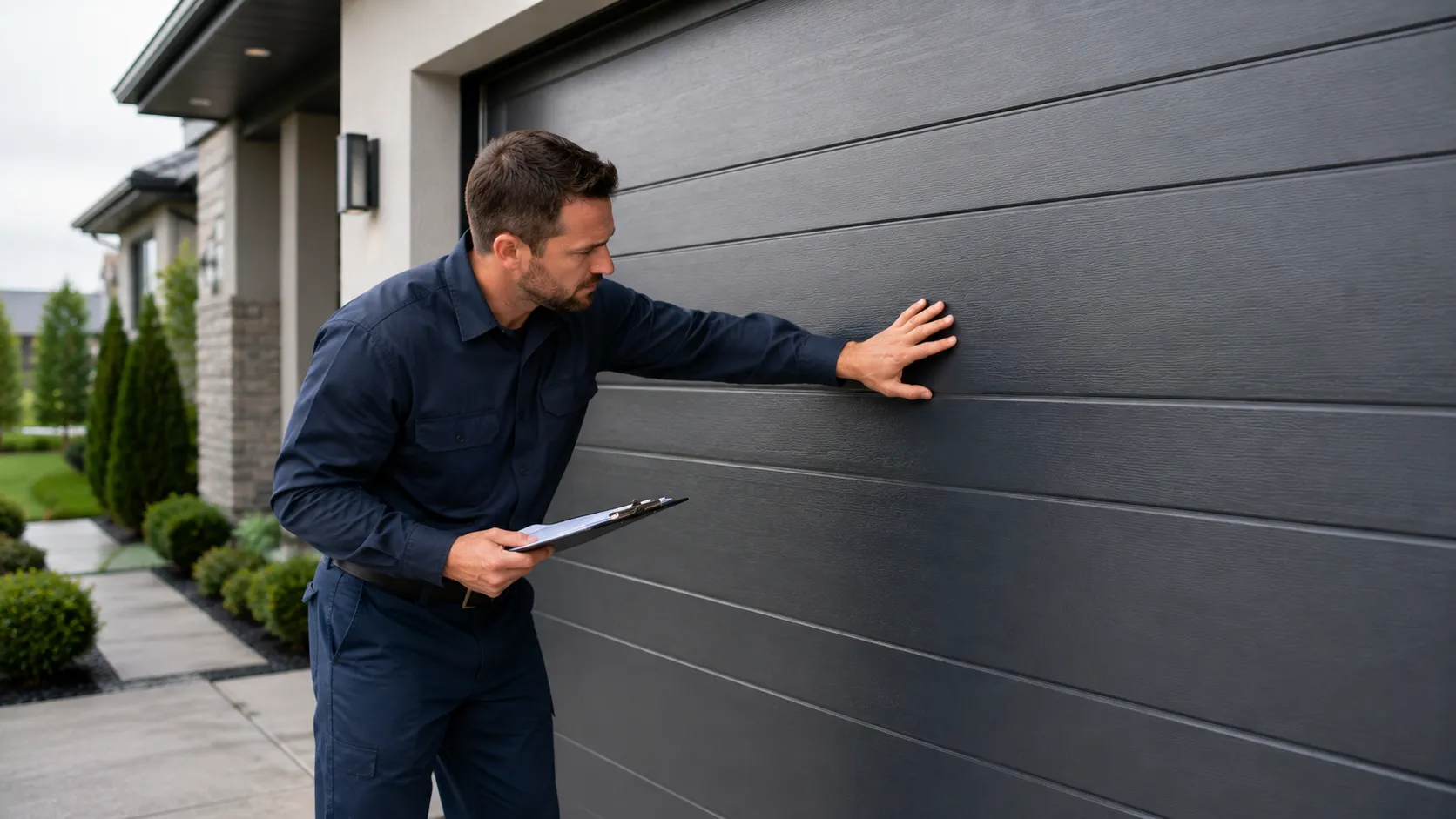
Not every noise is a call-now noise. A dry squeak on the rollers, especially on an older door in this moderate-heat climate, is usually just grease that's worn thin - it's annoying, not dangerous, and it can wait a few weeks if you're not in a rush. Same with a light rattle in the track on a windy day; loose but not broken.
What you can let sit: squeaking rollers, a mild hum from the opener motor that's been there for months without getting louder, or a slight vibration in a panel on a door that still opens and closes smoothly and evenly. None of those mean the door is about to fail.
The honest limitation here: we can't tell you over the phone whether your specific noise is the fine kind or the not-fine kind. Age of the door, how it sounds, and whether it's changed recently all matter, and those things are easier to judge standing in front of the door than guessing from a description. If the noise hasn't gotten worse in a month, it's usually safe to schedule rather than treat as an emergency.
The Problem
The noise that shouldn't wait is a loud bang, a sharp pop, or a grinding sound that's new and getting worse. On a house built in the 1960s or 70s - which describes a large share of the stock across this area - that's often a torsion spring at the end of its life or a cable starting to fray on original hardware that's been in place since the house was built. Springs don't warn you gently; they hold tension until they don't.
A slapping or scraping sound as the door moves usually means a roller has worn down or a track has drifted out of alignment, which happens gradually on older jamb wood as it settles over decades. That's a wear problem, not usually a safety one, but it gets worse the longer it runs.
The one that means stop using the door: any noise paired with the door catching, jerking, or dropping unevenly. That's spring or cable failure territory, and running the opener against that resistance is how a slow problem becomes a fast, expensive one.
How We Can Help
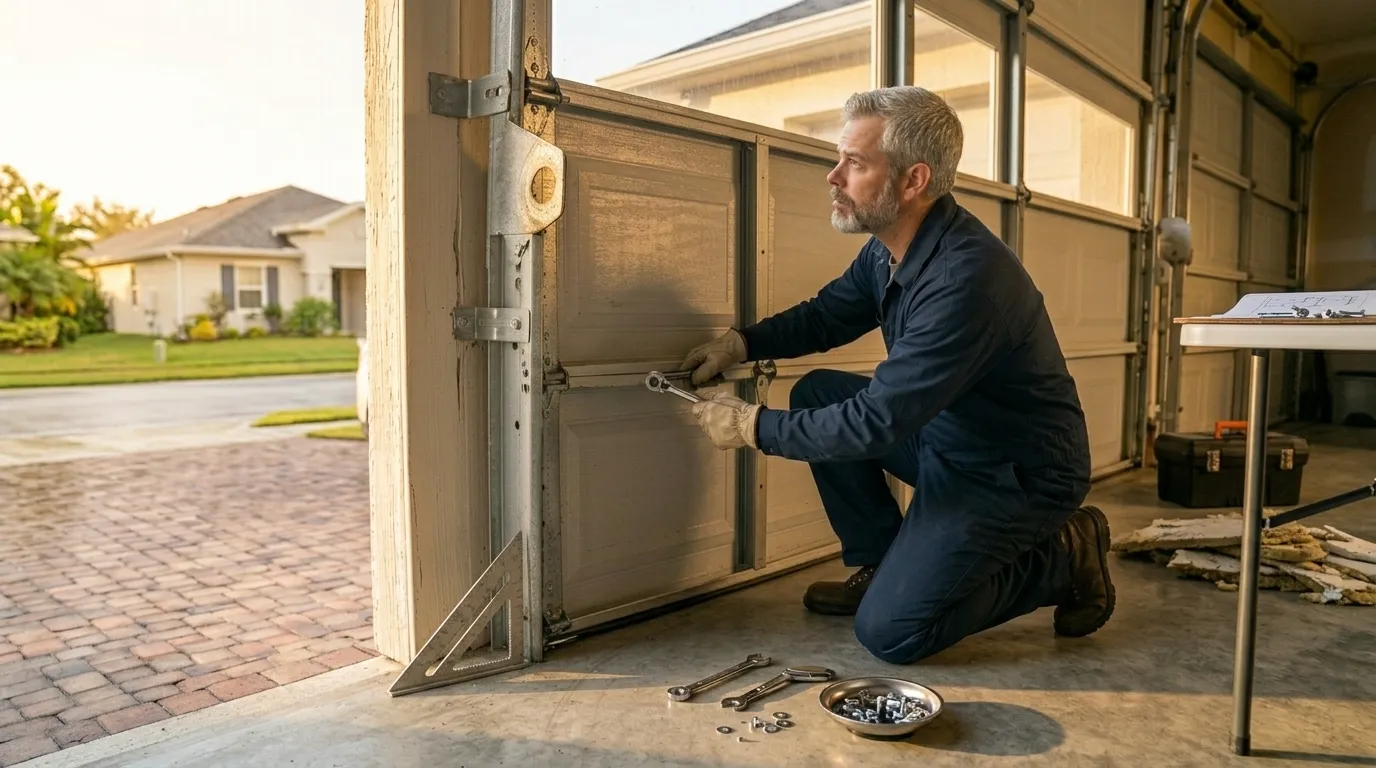
Garage Door Repair
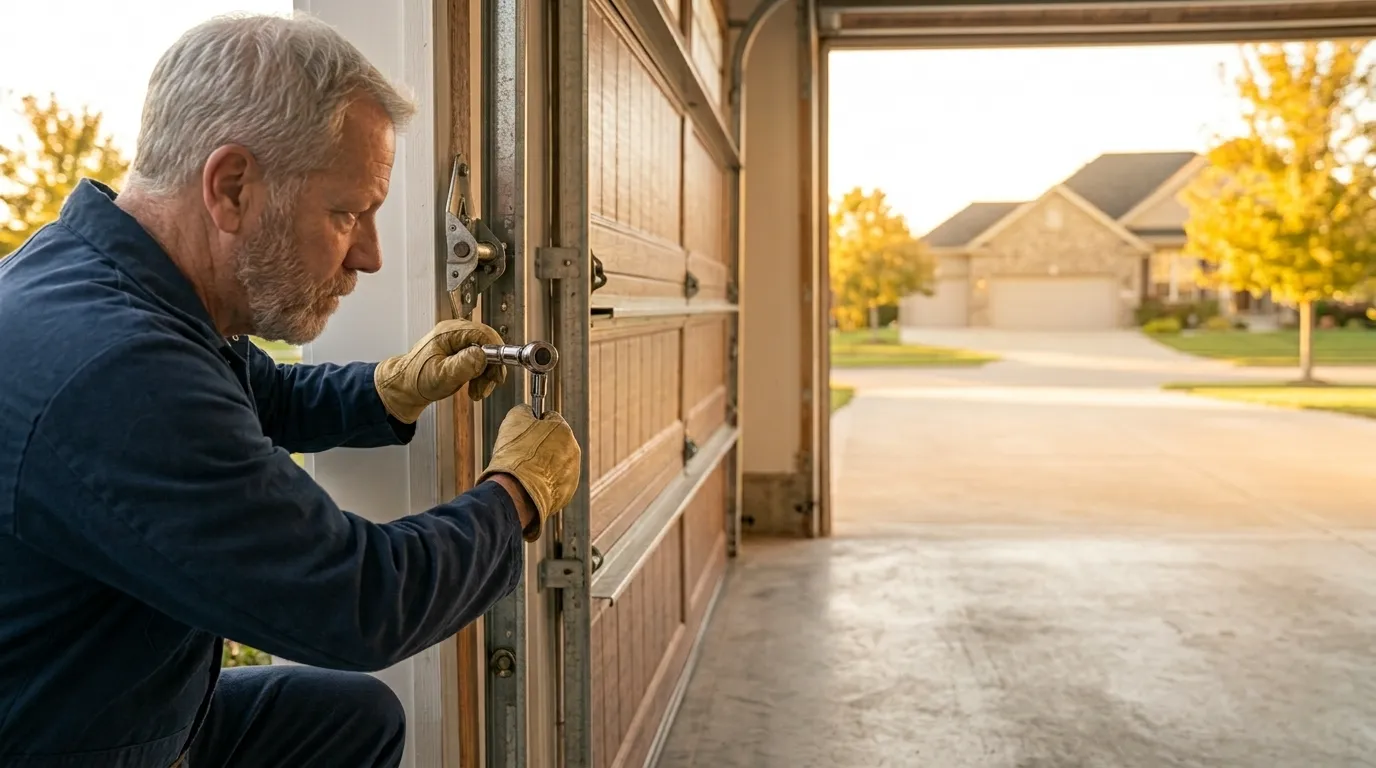
Springs, cables, tracks, rollers, and openers fixed by a tech who explains the problem before touching anything.
Learn more →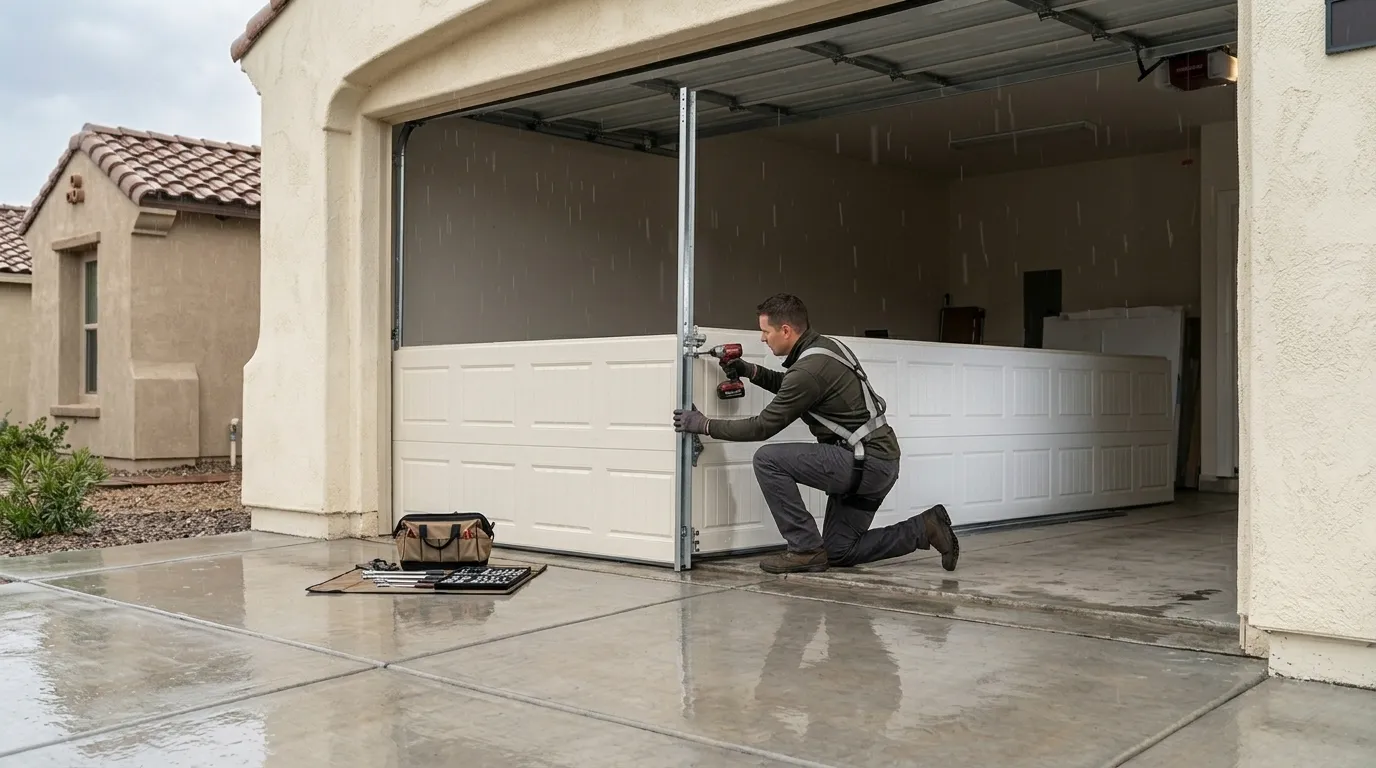
Garage Door Installation
New sectional doors sized and installed for the housing stock actually built in this area.
Learn more →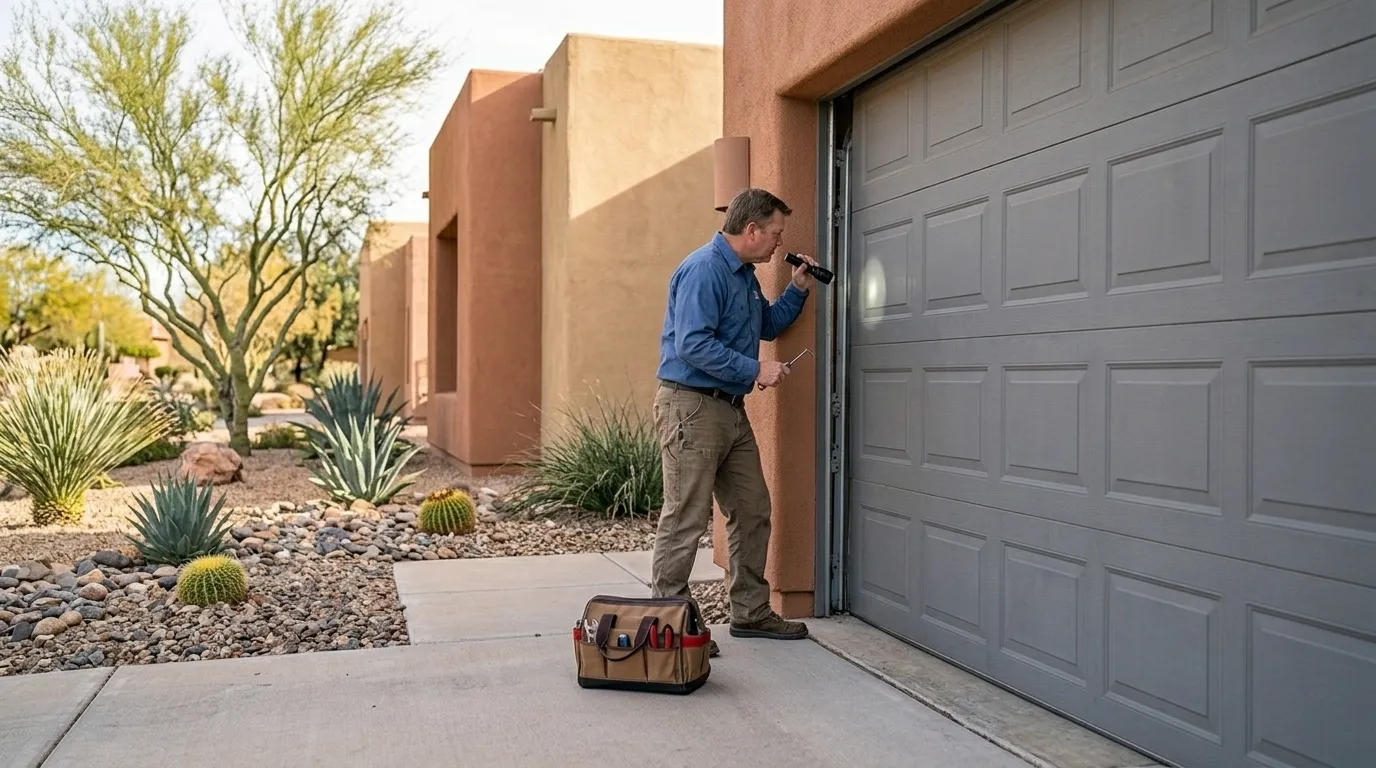
Garage Door Service
Tune-ups, lubrication, and safety checks that catch a small problem before it becomes a service call.
Learn more →Frequently Asked Questions
My garage door makes a loud pop but still opens fine - is that a big deal?
Treat it as one. A sharp pop is often a torsion spring taking on a hairline crack or a cable strand starting to fray. On a lot of the original hardware still running in this area's 1960s-70s houses, that spring has been under tension for decades. It can keep working right up until it doesn't, and that failure happens without warning.
Why does my door only squeak in summer?
Heat dries out old lubricant faster, and in this moderate-heat climate a hot garage bakes the grease on rollers and hinges into a hard film rather than keeping it workable. It's usually not a sign of damage, just maintenance that's overdue. A relube handles it most of the time.
Is it normal for an older door to sound different than a new one?
Yes. Original torsion hardware from a 1960s or 70s build wasn't made to run silently for fifty years, and small amounts of wear in the drums, bearings, and track brackets add up to noise long before they add up to failure. It's worth a look, but it's not automatically an emergency.
Can I just lubricate the noise away myself?
Sometimes, if it's a dry-roller squeak. What you shouldn't touch is anything involving the spring itself - that's stored tension that can injure you badly if it lets go while you're working on it. Lubricate hinges and rollers, leave the spring to someone who does it for a living.
Have a Door That Needs a Second Opinion?
Call and describe what it is doing - we will tell you what it likely is.